


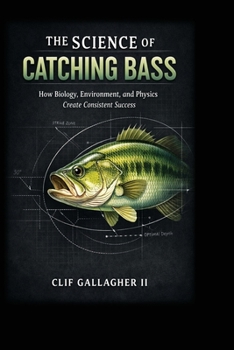
The Science of Catching Bass: How Biology, Environment, and Physics Create Consistent Success

The Science of Catching Bass breaks away from myths, superstition, and "confidence bait" culture to reveal why bass behave the way they do-and how anglers can use that knowledge to catch fish more consistently in any conditions.
Bass fishing isn't about luck. It's about understanding biology, environment, physics, and decision-making under changing conditions. Tournament anglers don't succeed because they know secret lures or magic spots-they succeed because they understand patterns, eliminate wasted water, and adapt faster than everyone else.
This book teaches you how to think like a professional angler-even if you never fish a tournament.
Inside, you'll learn:
Why bass behavior is predictable when you understand energy, metabolism, and sensory systems
How water temperature, oxygen, weather, and structure control where bass position
Why certain lures work in specific conditions-and fail in others
How angles, speed, and presentation mechanics affect strike probability
How tournament anglers use electronics, data, and patterning to reduce guesswork
How to adjust patterns intelligently when conditions change-without starting over
Why ethical angling and conservation are essential to long-term success
Rather than telling you what to throw, The Science of Catching Bass explains why decisions work. Each chapter connects scientific principles to real-world fishing strategies that apply across lakes, rivers, seasons, and pressure levels.
You don't need the latest electronics, a high-end boat, or a tournament entry fee to fish this way. You need a framework that replaces hope with reasoning and reaction with intention.
Whether you're a weekend angler looking for consistency or a competitive fisherman seeking an edge, this book will change how you approach every cast.
Fish like a scientist. Compete like a professional.
Customer Reviews
ThriftBooks® and the ThriftBooks® logo are registered trademarks of Thrift Books Global, LLC
