


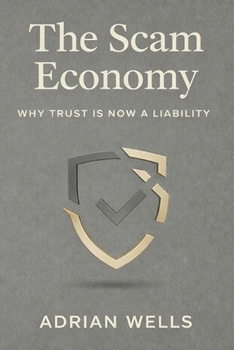
The Scam Economy: Why Trust Is Now a Liability

Trust used to be a safeguard. Today, it is increasingly a point of failure.
We live inside systems designed to look legitimate. Platforms present reassurance through familiar interfaces, verified symbols, polished language, and social proof. These signals feel like protection, yet they are often the very mechanisms through which value is extracted.
The Scam Economy examines a structural shift in modern life: trust has been scaled, automated, and monetized. Not through obvious fraud, but through systems that appear credible while quietly eroding accountability. The result is an environment where intelligent, cautious people are routinely misled, not because they lack awareness, but because the architecture around them has changed.
This book is not a catalog of scams, and it is not a warning fueled by fear. It is a sober analysis of how legitimacy is simulated, how responsibility is diffused, and why traditional markers of trust no longer reduce risk. It explains how institutions, platforms, and incentives have evolved in ways that reward ambiguity and punish scrutiny.
The Scam Economy offers a clear framework for understanding why trust now demands active management rather than passive acceptance. It challenges deeply held assumptions about credibility, safety, and expertise, and replaces them with a more realistic model of how modern systems actually function.
Written for professionals, decision-makers, and critical thinkers, this book does not promise certainty. It offers clarity. And in an economy built on misdirection, clarity is the rarest asset of all.
Customer Reviews
ThriftBooks® and the ThriftBooks® logo are registered trademarks of Thrift Books Global, LLC
