


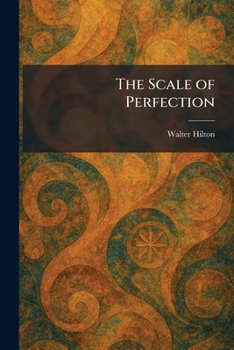
The Scale of Perfection

"The Scale of Perfection" is a seminal work of 14th-century Christian mysticism written by the Augustinian canon Walter Hilton. As one of the most influential spiritual guides of the Middle Ages, this profound treatise outlines the journey of the soul toward spiritual enlightenment and union with the divine. The work is structured as a guide for those seeking to progress from the active life to the contemplative life, offering both practical and theological insights into the nature of faith.
Hilton meticulously details the process of overcoming spiritual obstacles and the "image of sin" to restore the "image of God" within the human soul. His writing emphasizes the essential virtues of humility and charity, while highlighting the transformative power of divine grace. Known for its systematic approach and psychological depth, "The Scale of Perfection" provides a clear roadmap for the interior life that has resonated with readers for centuries. This classic of medieval literature remains a cornerstone of the English mystical tradition, offering timeless wisdom on the pursuit of holiness and the contemplative experience of God.
This work has been selected by scholars as being culturally important, and is part of the knowledge base of civilization as we know it. This work was reproduced from the original artifact, and remains as true to the original work as possible. Therefore, you may see the original copyright references, library stamps (as most of these works have been housed in our most important libraries around the world), and other notations in the work.
This work is in the public domain in the United States of America, and possibly other nations. Within the United States, you may freely copy and distribute this work, as no entity (individual or corporate) has a copyright on the body of the work.
As a reproduction of a historical artifact, this work may contain missing or blurred pages, poor pictures, errant marks, etc. Scholars believe, and we concur, that this work is important enough to be preserved, reproduced, and made generally available to the public. We appreciate your support of the preservation process, and thank you for being an important part of keeping this knowledge alive and relevant.
Customer Reviews
ThriftBooks ® and the ThriftBooks ® logo are registered trademarks of Thrift Books Global, LLC
