


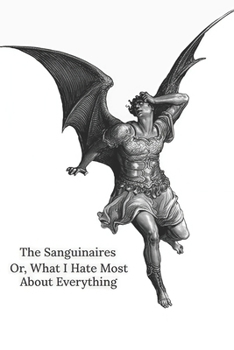
The Saguinaires: Or What I Hate Most About Everything

"What if the Oracle of Delphi was broadcast to the entire world at once-and it was an absolute death sentence?"
In the gritty, beer-soaked underbelly of Toronto, humanity has collapsed into an inescapable causal loop. The Event has occurred: a sudden, universal psychic flash that granted every human being the exact, unalterable vision of their own death.
To curb the resulting existential madness, the state deploys the Department of Psychological Welfare. Operating under the guise of a global health emergency, this therapeutic autocracy mandates the use of Nepenthe-a clinical sedative designed to chemically erase the memory of the end and enforce a hollow, corporate normalcy.
But down in the gutters of the city, a volatile collective of outcasts, drunkards, and street philosophers refuse the pill. Mockingly labelled the Sanguinaires, they choose to cling to their raw, morbid meditations, aestheticizing their terror through relentless debauchery and bitter cynicism. Among them is Laertes, a detached ex-editor navigating a landscape of institutional grifts, fractured campus betrayals, and the visceral human wreckage of a dying world.
When the state's medical vice tightens into global lockdowns and civil unrest ignites over a viral video of police brutality, the illusion of free will completely shatters. The Sanguinaires are forced to confront the ultimate, Sophoclean irony: that every desperate choice they make to flee their fated end is the exact engine driving them toward it.
Fusing the ornate linguistic elegance of the Western canon with the unapologetic grime of lowbrow realism, The Sanguinaires is a fiercely misanthropic satire, a profound exploration of grief, and a devastatingly prophetic diagnostic of the modern technocratic machine. Written years before the global lexicon of lockdowns, quarantines, and medical mandates became our daily reality, it stands as an eerie, living testament to the very curse of prescience it describes. It is Emil Cioran trapped in a Toronto dive bar; Philip K. Dick rewriting Oedipus Rex for the modern apocalypse.
- The Toronto Review
Customer Reviews
ThriftBooks ® and the ThriftBooks ® logo are registered trademarks of Thrift Books Global, LLC
