


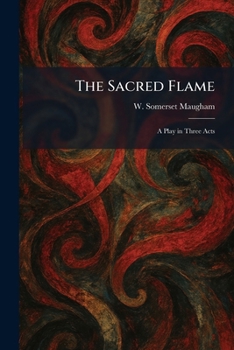
The Sacred Flame: A Play in Three Acts

Select Format
Select Condition 
Book Overview
"The Sacred Flame" is a compelling three-act drama by the renowned playwright and novelist W. Somerset Maugham. Set in the years following the Great War, the play centers on Maurice Tabret, a former aviator who has been left paralyzed following a tragic plane crash. Maurice lives under the devoted care of his wife, Stella, and his steadfast mother, Mrs. Tabret. However, the domestic peace is shattered when Maurice is found dead under mysterious circumstances on the very night his brother arrives for a visit.
As the family and their close associates grapple with the sudden loss, the play transforms into a poignant exploration of morality, sacrifice, and the complexities of human emotion. Maugham masterfully navigates the ethical dilemmas surrounding mercy killing and the boundaries of maternal love. Through sharp dialogue and intricate character development, "The Sacred Flame" examines the lengths to which individuals will go to protect those they love from suffering and disgrace. This work remains a powerful example of Maugham's ability to weave profound social commentary into a gripping theatrical narrative, challenging the audience to consider the true meaning of justice and compassion.
This work has been selected by scholars as being culturally important, and is part of the knowledge base of civilization as we know it. This work was reproduced from the original artifact, and remains as true to the original work as possible. Therefore, you may see the original copyright references, library stamps (as most of these works have been housed in our most important libraries around the world), and other notations in the work.
This work is in the public domain in the United States of America, and possibly other nations. Within the United States, you may freely copy and distribute this work, as no entity (individual or corporate) has a copyright on the body of the work.
As a reproduction of a historical artifact, this work may contain missing or blurred pages, poor pictures, errant marks, etc. Scholars believe, and we concur, that this work is important enough to be preserved, reproduced, and made generally available to the public. We appreciate your support of the preservation process, and thank you for being an important part of keeping this knowledge alive and relevant.
Related Subjects
DramaCustomer Reviews
ThriftBooks ® and the ThriftBooks ® logo are registered trademarks of Thrift Books Global, LLC
