


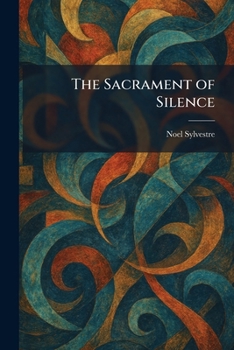
The Sacrament of Silence

"The Sacrament of Silence" is a compelling dramatic novel set against the rugged and evocative landscape of Brittany. The story centers on a young Catholic priest who finds his faith and his conscience put to the ultimate test when he becomes the guardian of a profound secret. Bound by the absolute sanctity of the seal of the confessional, the protagonist must navigate a harrowing moral landscape after hearing the confession of a crime.
As legal and social pressures mount, the priest remains steadfast in his religious duty, even when the consequences threaten his own freedom and reputation. Noel Sylvestre masterfully explores themes of spiritual integrity, personal sacrifice, and the tension between divine law and human justice. The narrative delves deep into the psychological and emotional burden of silence, painting a vivid portrait of a man caught between his commitment to his community and his unwavering devotion to his vows.
A poignant exploration of religious devotion and ethical courage, "The Sacrament of Silence" remains a powerful example of early twentieth-century literary fiction that probes the complexities of the human soul and the heavy weight of spiritual responsibility.
This work has been selected by scholars as being culturally important, and is part of the knowledge base of civilization as we know it. This work was reproduced from the original artifact, and remains as true to the original work as possible. Therefore, you may see the original copyright references, library stamps (as most of these works have been housed in our most important libraries around the world), and other notations in the work.
This work is in the public domain in the United States of America, and possibly other nations. Within the United States, you may freely copy and distribute this work, as no entity (individual or corporate) has a copyright on the body of the work.
As a reproduction of a historical artifact, this work may contain missing or blurred pages, poor pictures, errant marks, etc. Scholars believe, and we concur, that this work is important enough to be preserved, reproduced, and made generally available to the public. We appreciate your support of the preservation process, and thank you for being an important part of keeping this knowledge alive and relevant.
Customer Reviews
ThriftBooks ® and the ThriftBooks ® logo are registered trademarks of Thrift Books Global, LLC
