


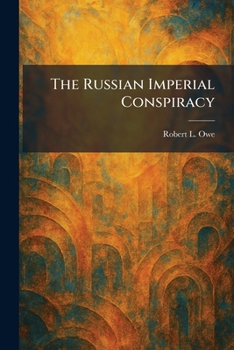
The Russian Imperial Conspiracy

"The Russian Imperial Conspiracy 1892-1914" is a provocative historical investigation into the clandestine diplomatic maneuvers and geopolitical strategies of the Russian Empire in the decades leading up to the Great War. This work presents a critical analysis of the secret treaties, military conventions, and imperial ambitions that shaped European politics at the turn of the twentieth century.
The text meticulously examines the period between 1892 and 1914, arguing that the origins of World War I were deeply rooted in a series of hidden agreements and calculated provocations by the Tsarist regime and its allies. By scrutinizing primary documents and diplomatic correspondence, the author challenges conventional narratives regarding the causes of the war, instead highlighting the shared responsibility and complex web of alliances that propelled the world toward global conflict.
This account offers essential insights for readers interested in international relations, the fall of the Romanov dynasty, and the intricate causes of the first modern total war. "The Russian Imperial Conspiracy 1892-1914" remains a significant historical study for understanding how secret diplomacy and nationalistic fervor transformed regional tensions into a worldwide catastrophe.
This work has been selected by scholars as being culturally important, and is part of the knowledge base of civilization as we know it. This work was reproduced from the original artifact, and remains as true to the original work as possible. Therefore, you may see the original copyright references, library stamps (as most of these works have been housed in our most important libraries around the world), and other notations in the work.
This work is in the public domain in the United States of America, and possibly other nations. Within the United States, you may freely copy and distribute this work, as no entity (individual or corporate) has a copyright on the body of the work.
As a reproduction of a historical artifact, this work may contain missing or blurred pages, poor pictures, errant marks, etc. Scholars believe, and we concur, that this work is important enough to be preserved, reproduced, and made generally available to the public. We appreciate your support of the preservation process, and thank you for being an important part of keeping this knowledge alive and relevant.
Related Subjects
HistoryCustomer Reviews
ThriftBooks ® and the ThriftBooks ® logo are registered trademarks of Thrift Books Global, LLC
