


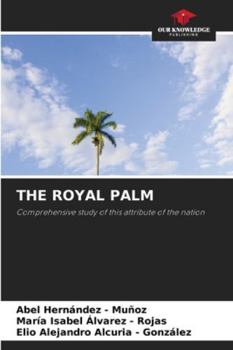
The Royal Palm
No Customer Reviews

The first tree to be seen by visitors to Cuba is the Royal Palm. It is difficult to think of this Caribbean island without its presence, and throughout the country, from Cape San Antonio, its westernmost tip, to the easternmost point, Punta de Maisi, palms can be seen in groups or isolated.The Cuban Royal Palm (Roystonea regia), besides having important botanical values, has produced a positive and deep impression in Cuban society.Roystonea regia belongs to the palmaceae family and can reach twelve to fifteen meters in height. Its leaves are used to shade tobacco and roof houses, the trunk provides boards for houses and furniture, the yagua is used to pack tobacco in branches and is known as tercio; its fruits, called palmiche, are used to feed animals.This prodigious tree provides three ecosystem services: it provides shelter for wildlife, nesting sites for wild birds that nest in cavities in the tree trunks, and food for avifauna.This is the book about this important tree of the Cuban flora, recognized as the queen of the fields for its magnificence and beauty.
Format:Paperback
Language:English
ISBN:6209352359
ISBN13:9786209352355
Release Date:November 2025
Publisher:Our Knowledge Publishing
Length:96 Pages
Weight:0.31 lbs.
Dimensions:0.2" x 6.0" x 9.0"
Customer Reviews
0 rating
Copyright © 2026 Thriftbooks.com Terms of Use
| Privacy Policy | Do Not
Sell/Share My Personal Information | Cookie Policy | Cookie Preferences | Accessibility Statement
ThriftBooks® and the ThriftBooks® logo are registered trademarks of Thrift Books Global, LLC
ThriftBooks® and the ThriftBooks® logo are registered trademarks of Thrift Books Global, LLC
