


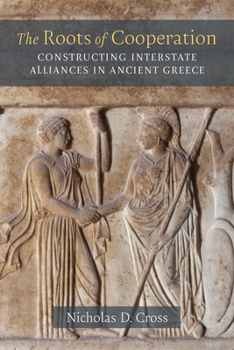
The Roots of Cooperation: Constructing Interstate Alliances in Ancient Greece

Nicholas D. Cross's The Roots of Cooperation reinterprets how the Greeks conceived, enacted, and displayed their alliances, offering a socially grounded understanding of interstate relations in antiquity. Following the international relations model of constructivism, Cross emphasizes the social features of Greek alliances including words used to articulate agreements, ceremonial acts they performed during the formation process, and the symbols they employed to illustrate how the alliances contributed to the creation of shared goals, ideas, and identities. The study covers the proposals for alliances, the articulation of alliance treaties, the ratification of alliances by means of religious ceremonies, the public display of the agreements in visual media, and the implications of terminated alliances. While alliances had political and military objectives, the Greeks represented them as collective and consensual achievements. Relying as much on epigraphic and numismatic evidence as on the literary record, this study recontextualizes interstate activity by analyzing how contemporaries imagined and depicted their formal interstate agreements. The Roots of Cooperation offers fresh insights that go beyond just alliances and can deepen our understanding of interstate relations, broadly speaking, in the ancient world.
Customer Reviews
ThriftBooks ® and the ThriftBooks ® logo are registered trademarks of Thrift Books Global, LLC
