


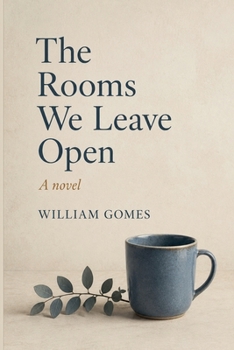
The Rooms We Leave Open

A quiet, powerful literary novel about psychotherapy, grief, migration memory, family silence, institutional language, and the fragile rooms where people try to be heard.
Dr Samira Rahman is a psychotherapist in York who has built her life around careful listening. Her consulting room is ordered, quiet and restrained: tissues, chairs, water, a clock, a window, and the disciplined attention of a woman trained not to rush meaning.
But when Samira learns that a former client has died unexpectedly, the boundaries between professional composure and private unease begin to shift. The client is no longer in the room, but their absence unsettles everything: the records, the memories, the supervision notes, the institutional response, and the difficult question of what was heard, what was missed, and what could not be held by the file.
As Samira continues to meet clients carrying grief, panic, family pain, migration memory, loneliness and unspoken shame, she is drawn into a deeper reckoning with listening itself. What does a therapeutic room contain? What does an institution record? What disappears when distress is translated into professional language? And what remains between the living and the dead when no sentence can make the past whole?
Set in York, The Rooms We Leave Open is a deeply humane work of contemporary literary fiction about grief, psychotherapy, family, migration, memory, institutional processes and the moral difficulty of care. The novel contains fictional depictions of psychotherapy-adjacent encounters, institutional processes, grief, distress, migration memory and family life, and is not a clinical, legal or self-help text.
Written with restraint, emotional precision and quiet moral force, this is a novel for readers drawn to serious literary fiction, psychological fiction, family drama, grief fiction, migration stories, and novels about the hidden lives of ordinary rooms.
A compassionate and searching novel about listening, loss, responsibility, and the rooms we leave open for what cannot yet be said.
Customer Reviews
ThriftBooks ® and the ThriftBooks ® logo are registered trademarks of Thrift Books Global, LLC
