


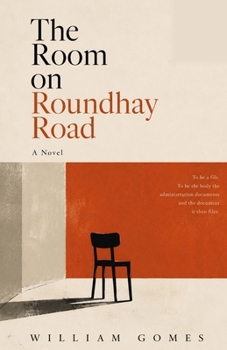
The Room on Roundhay Road

A quietly powerful contemporary British literary novel about refuge, language, community, bureaucracy and the fragile rooms people make for one another.
On Roundhay Road, in a leased church hall with a failing strip light, a warm urn and a row of familiar chairs, Halima keeps open a room for people who have already been spoken about too much.
Olha arrives early and switches on the urn. Reem brings her children and the careful arithmetic of asylum support. Beth teaches prepositions at the front table. Eddie brings food, Tariq brings the paper, and Hina keeps the English lessons moving. Around them gather people carrying the weight of migration, waiting, work, grief, faith, children, paperwork and the need to belong somewhere, even for a morning.
The room is not grand. The radiator gives up by mid-afternoon. The strip light flickers. The council letter waits in a brown envelope. Yet inside this ordinary space, people are more than their status, more than their forms, more than the numbers assigned to them by systems that ask for evidence before they recognise a life.
When funding is placed under review, the room must prove itself in the language of outcomes, credibility, user base and due diligence. What began as tea, English lessons, children's toys, translation, listening and practical mercy is pulled into the machinery of administration.
Written with restraint, compassion and moral clarity, The Room on Roundhay Road is a contemporary literary novel about asylum, migration, English language learning, community care, austerity, public funding and the silence produced when people are turned into files.
It asks what a room can hold when the world outside has already decided what people are allowed to be.
Customer Reviews
ThriftBooks ® and the ThriftBooks ® logo are registered trademarks of Thrift Books Global, LLC
