


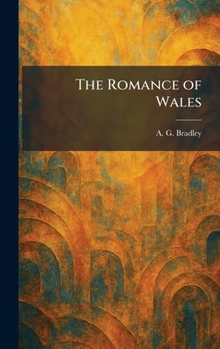
The Romance of Wales

"The Romance of Wales" is an evocative exploration of the landscapes, legends, and cultural heritage of Wales. Written by the esteemed travel writer and historian A.G. Bradley, this work delves into the rugged beauty of the Welsh countryside, from the soaring peaks of Snowdonia to the tranquil valleys of the south. Bradley combines historical insight with a deep appreciation for the natural world, capturing the unique spirit of a nation defined by its Celtic roots and storied past.
The narrative guides readers through historical landmarks, ancient castles, and quaint villages, offering vivid descriptions of the topography and the people who have shaped it. Bradley's prose brings to life the romance of the land-not just as a scenic backdrop, but as a living tapestry of myth, struggle, and tradition. This book serves as both a comprehensive guide for the armchair traveler and a poignant reflection on the enduring charm of the Welsh landscape.
Throughout the text, readers will find detailed accounts of local folklore and significant historical events that have left their mark on the territory. By weaving together geography and history, Bradley provides a timeless tribute to the enduring allure of Wales, making it an essential read for anyone interested in British topography and cultural history.
This work has been selected by scholars as being culturally important, and is part of the knowledge base of civilization as we know it. This work was reproduced from the original artifact, and remains as true to the original work as possible. Therefore, you may see the original copyright references, library stamps (as most of these works have been housed in our most important libraries around the world), and other notations in the work.
This work is in the public domain in the United States of America, and possibly other nations. Within the United States, you may freely copy and distribute this work, as no entity (individual or corporate) has a copyright on the body of the work.
As a reproduction of a historical artifact, this work may contain missing or blurred pages, poor pictures, errant marks, etc. Scholars believe, and we concur, that this work is important enough to be preserved, reproduced, and made generally available to the public. We appreciate your support of the preservation process, and thank you for being an important part of keeping this knowledge alive and relevant.
Customer Reviews
ThriftBooks ® and the ThriftBooks ® logo are registered trademarks of Thrift Books Global, LLC
