


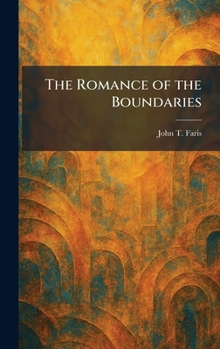
The Romance of the Boundaries

"The Romance of the Boundaries" is a fascinating exploration of the historical struggles and human stories behind the establishment of the borders that define the United States. Author John T. Faris delves into the complex narratives of territorial disputes, diplomatic negotiations, and the rugged expeditions that shaped the nation's map. From the early colonial charters to the expansion into the West, the work examines how geographical lines were drawn-often amidst conflict, confusion, and remarkable perseverance.
Through engaging prose, Faris brings to life the surveyors, pioneers, and statesmen who contended with dense forests, vast prairies, and shifting riverbeds to mark the limits of states and territories. The book covers legendary boundary controversies, such as the dispute over the Mason and Dixon Line and the various "wars" fought over slivers of land between neighbors. It highlights the ingenuity and courage required to map an untamed continent and the political compromises necessary to forge a unified nation.
This work serves as a compelling bridge between geography and history, offering readers a unique perspective on the physical and political development of America. "The Romance of the Boundaries" remains an essential resource for those interested in the intricacies of American expansion and the enduring legacy of the lines that divide and define our landscape.
This work has been selected by scholars as being culturally important, and is part of the knowledge base of civilization as we know it. This work was reproduced from the original artifact, and remains as true to the original work as possible. Therefore, you may see the original copyright references, library stamps (as most of these works have been housed in our most important libraries around the world), and other notations in the work.
This work is in the public domain in the United States of America, and possibly other nations. Within the United States, you may freely copy and distribute this work, as no entity (individual or corporate) has a copyright on the body of the work.
As a reproduction of a historical artifact, this work may contain missing or blurred pages, poor pictures, errant marks, etc. Scholars believe, and we concur, that this work is important enough to be preserved, reproduced, and made generally available to the public. We appreciate your support of the preservation process, and thank you for being an important part of keeping this knowledge alive and relevant.
Customer Reviews
ThriftBooks ® and the ThriftBooks ® logo are registered trademarks of Thrift Books Global, LLC
