


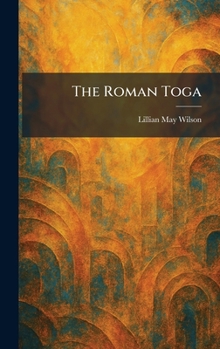
The Roman Toga

"The Roman Toga" is a definitive scholarly study dedicated to the history, evolution, and construction of the signature garment of ancient Rome. This work meticulously traces the development of the toga from its earliest origins through its various transformations during the Republican and Imperial eras. By analyzing archaeological evidence, ancient sculpture, and literary sources, the book provides an in-depth look at how the toga served as a powerful symbol of Roman citizenship, social status, and political identity.
Readers will find detailed discussions on the different types of togas, such as the toga praetexta and the toga virilis, along with practical insights into how these complex garments were draped and worn. The research offers a unique intersection of classical history, archaeology, and the history of fashion, making it an essential resource for historians, costume designers, and anyone interested in the daily life and material culture of the Roman people. This work remains a cornerstone for understanding the aesthetic and cultural importance of Roman dress, capturing the dignity and complexity of a garment that defined an empire.
This work has been selected by scholars as being culturally important, and is part of the knowledge base of civilization as we know it. This work was reproduced from the original artifact, and remains as true to the original work as possible. Therefore, you may see the original copyright references, library stamps (as most of these works have been housed in our most important libraries around the world), and other notations in the work.
This work is in the public domain in the United States of America, and possibly other nations. Within the United States, you may freely copy and distribute this work, as no entity (individual or corporate) has a copyright on the body of the work.
As a reproduction of a historical artifact, this work may contain missing or blurred pages, poor pictures, errant marks, etc. Scholars believe, and we concur, that this work is important enough to be preserved, reproduced, and made generally available to the public. We appreciate your support of the preservation process, and thank you for being an important part of keeping this knowledge alive and relevant.
Customer Reviews
ThriftBooks ® and the ThriftBooks ® logo are registered trademarks of Thrift Books Global, LLC
