


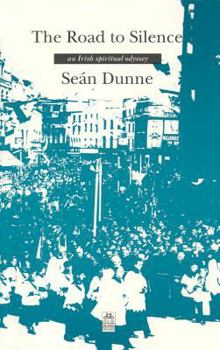
The Road to Silence: An Irish Spiritual Odyssey

Tells the story of a personal journey away from and then back into Catholicism. Irish poet Dunne recounts his vivid memories of a traditional Catholic background in the 1960s, his rejection of... This description may be from another edition of this product.
Format:Paperback
Language:English
ISBN:187459712X
ISBN13:9781874597124
Release Date:December 1994
Publisher:New Island Books
Length:79 Pages
Weight:0.25 lbs.
Dimensions:8.8" x 0.3" x 5.8"
Customer Reviews
1 rating
Brief memoir, big impact: a mature look at spirituality vs. faith
Published by Thriftbooks.com User , 16 years ago
The late poet Seán Dunne wrote this memoir of his ambivalence with Irish Catholicism in 1994, the year before his unexpected death. As he was but five years older than me, I confess much identification with his struggles to recognize the spiritual quest that persists within one agnostically matured. He's very fair about the complex legacy of the Church for the Irish, the impact that the void within can leave that neither Marxism nor atheism can assuage, and the challenge of separating one's search for meaning-- perhaps within a Catholic framework-- from one's often absent, or departed, belief in its doctrines. Reading his difficulties, they mirrored my own; so did his readings: among them, inevitably, Thomas Merton. Dunne to his credit didn't favor the monk's earlier, more "triumphalist" writings; he first heard of Zen by way of Merton, as I suppose many of us brought up Catholic have. Intriguingly, he finds himself wandering closer to not the need for surety, but for silence, "the opposite of the sociological clamour." (54) Such a meeting may have dangers: "too much talk can be a form of evasion. Eloquence can hide more than it reveals. In such instances, silence is an unwanted form of confrontation." (55) He will eventually learn from the Rule of Benedict its first word, the command to "listen." He turns from a 1970s student immersion with Marxists, who leave within for him only a void that all their theories cannot fill, and for a time sits silently at local Quaker services. Not as an adherent, but as an "attender." At the Trappist monastery of Mount Mellaray, this aspiring journalist found himself going beyond the usual story when he returned to stay in what was a once barren landscape. Restless and edgy, he has a temperament that's long sought solace, that conveys "systems of thought that gave structure and sense to life."(21) Marxism satisfies the intellect but starves the soul; Humanism beckons, but can it alone fill the emptiness left by the ebbing of a childhood faith? His young self learned never to draw beyond clumsy figures and shapes; as a mature man, he sees that his inability to sketch nuanced, believable portrayals has its analogy in a faith that we keep the rest of our lives still locked "within a child's framework, lacking any trace of adult intellect." (19-20) He pushes aside his cradle Catholicism. But, what can replace it in a modern person's desperation to still place the need for guidance foremost, even after the explanations of religious dogma have been discarded? At Melleray, these questions still raging for years, in 1984 he enters the once lunar atmosphere filled by a now nourishing ambiance, to understand, with maturity, what a thirty-year-old can learn from the monastically enriched landscape. "A rose does not preach. It simply spreads its fragrance"-- the guestmaster's words. Guests make the bed for the next visitor. No invoices; a guest pays anonymously in an envelope what he can, or thinks he should. (Earl
Copyright © 2026 Thriftbooks.com Terms of Use
| Privacy Policy | Do Not
Sell/Share My Personal Information | Cookie Policy | Cookie Preferences | Accessibility Statement
ThriftBooks® and the ThriftBooks® logo are registered trademarks of Thrift Books Global, LLC
ThriftBooks® and the ThriftBooks® logo are registered trademarks of Thrift Books Global, LLC
