


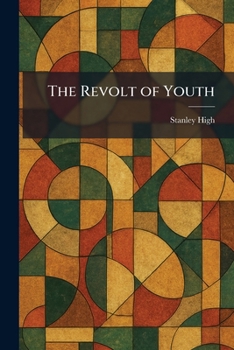
The Revolt of Youth

Select Format
Select Condition 
Book Overview
"The Revolt of Youth" offers a compelling look at the rising tide of global youth movements in the immediate aftermath of the First World War. Written during a period of profound social and political transition, Stanley High explores the spirit of disillusionment and the subsequent surge of idealism among the younger generation across Europe, Asia, and the Americas. The work examines how young people sought to break away from the traditional structures and failures of their predecessors, aiming instead for a world defined by peace, international cooperation, and social justice.
High provides a first-hand perspective on various organizations and student demonstrations, highlighting the shared aspirations that transcended national borders. From the student movements in China to the burgeoning youth groups in Germany and England, "The Revolt of Youth" documents a pivotal moment in history when the voices of the next generation began to demand a seat at the table of global governance. This book remains an essential resource for those interested in the history of social activism, generational conflict, and the transformative power of youthful conviction in the early 20th century. It captures the raw energy of a world in flux and the determination of those who believed they could build a better future from the ruins of the past.
This work has been selected by scholars as being culturally important, and is part of the knowledge base of civilization as we know it. This work was reproduced from the original artifact, and remains as true to the original work as possible. Therefore, you may see the original copyright references, library stamps (as most of these works have been housed in our most important libraries around the world), and other notations in the work.
This work is in the public domain in the United States of America, and possibly other nations. Within the United States, you may freely copy and distribute this work, as no entity (individual or corporate) has a copyright on the body of the work.
As a reproduction of a historical artifact, this work may contain missing or blurred pages, poor pictures, errant marks, etc. Scholars believe, and we concur, that this work is important enough to be preserved, reproduced, and made generally available to the public. We appreciate your support of the preservation process, and thank you for being an important part of keeping this knowledge alive and relevant.
Customer Reviews
ThriftBooks ® and the ThriftBooks ® logo are registered trademarks of Thrift Books Global, LLC
