


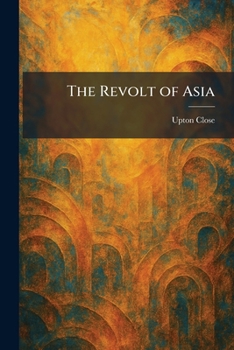
The Revolt of Asia

"The Revolt of Asia" offers a provocative and timely analysis of the burgeoning nationalist movements that began to reshape the continent in the early 20th century. Written during a pivotal era of global transition, the work examines the decline of Western imperial dominance and the simultaneous rise of self-determination among Asian nations. Upton Close provides a first-hand perspective on the social and political upheavals in regions such as China, India, and Japan, arguing that the era of Western supremacy in the East was rapidly coming to an end.
The text delves into the cultural and economic factors driving this "revolt," highlighting the complexities of international relations and the inevitability of a new world order. Close's insights into the motivations of Asian leaders and the spirit of their people provide a crucial historical context for understanding the modern geopolitical landscape. By documenting the end of the "white man's era" in Asia, the book serves as both a historical record and a prophetic warning about the shifting scales of global power. "The Revolt of Asia" remains an essential read for those interested in colonial history, international diplomacy, and the origins of modern Asian identity.
This work has been selected by scholars as being culturally important, and is part of the knowledge base of civilization as we know it. This work was reproduced from the original artifact, and remains as true to the original work as possible. Therefore, you may see the original copyright references, library stamps (as most of these works have been housed in our most important libraries around the world), and other notations in the work.
This work is in the public domain in the United States of America, and possibly other nations. Within the United States, you may freely copy and distribute this work, as no entity (individual or corporate) has a copyright on the body of the work.
As a reproduction of a historical artifact, this work may contain missing or blurred pages, poor pictures, errant marks, etc. Scholars believe, and we concur, that this work is important enough to be preserved, reproduced, and made generally available to the public. We appreciate your support of the preservation process, and thank you for being an important part of keeping this knowledge alive and relevant.
Customer Reviews
ThriftBooks ® and the ThriftBooks ® logo are registered trademarks of Thrift Books Global, LLC
