


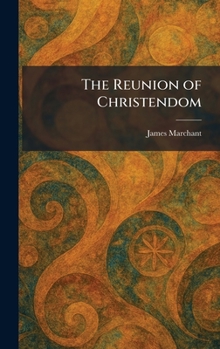
The Reunion of Christendom

"The Reunion of Christendom" is an insightful and comprehensive exploration of the movement toward unity among the diverse branches of the Christian faith. Edited by Sir James Marchant, this work brings together perspectives from various ecclesiastical traditions to examine the theological, social, and historical challenges facing the prospect of a unified Church. Written during a pivotal era for the ecumenical movement, the text addresses the pressing need for cooperation and mutual understanding in an increasingly complex global landscape.
The book delves into the fundamental principles that define different denominations while seeking common ground upon which a shared future might be built. It offers a scholarly yet accessible analysis of the doctrinal differences and the shared spiritual goals that have both divided and motivated Christian communities throughout history. Readers interested in theology, church history, and the philosophy of religion will find this volume to be a significant contribution to the study of religious diplomacy and institutional reform.
As a historical record of religious thought, "The Reunion of Christendom" serves as a testament to the enduring quest for harmony within the faith. It remains a valuable resource for understanding the roots of modern ecumenical dialogue and the persistent efforts to bridge the gap between varying interpretations of Christian doctrine.
This work has been selected by scholars as being culturally important, and is part of the knowledge base of civilization as we know it. This work was reproduced from the original artifact, and remains as true to the original work as possible. Therefore, you may see the original copyright references, library stamps (as most of these works have been housed in our most important libraries around the world), and other notations in the work.
This work is in the public domain in the United States of America, and possibly other nations. Within the United States, you may freely copy and distribute this work, as no entity (individual or corporate) has a copyright on the body of the work.
As a reproduction of a historical artifact, this work may contain missing or blurred pages, poor pictures, errant marks, etc. Scholars believe, and we concur, that this work is important enough to be preserved, reproduced, and made generally available to the public. We appreciate your support of the preservation process, and thank you for being an important part of keeping this knowledge alive and relevant.
Customer Reviews
ThriftBooks ® and the ThriftBooks ® logo are registered trademarks of Thrift Books Global, LLC
