


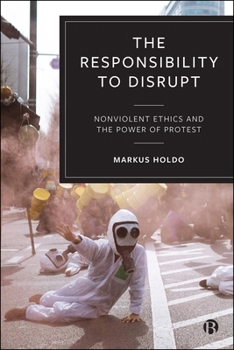
The Responsibility to Disrupt: Activism, Ethics and the Power of Protest

Protests against human rights violations, austerity and genocide are frequently claimed to be undemocratic and violent. The Responsibility to Disrupt argues that disruption is not only necessary for democracy, but a responsibility of democratic citizens, particularly when formal institutions fail to address systemic injustices.
With a focus on disruptive activism in democratic contexts, the book examines the role of disruption through case studies including Extinction Rebellion, pro-Palestine university campus protests and the activities of far-right activist groups. It approaches the ethical question of disruption from three angles: a citizen responsibility, a situated practice and a political act that always requires a specific justification.
Ultimately, the book argues that the legitimacy of disruption is rarely, if ever, uncontestable: the point is not to be right, but to spark reflection.
Customer Reviews
ThriftBooks® and the ThriftBooks® logo are registered trademarks of Thrift Books Global, LLC
