


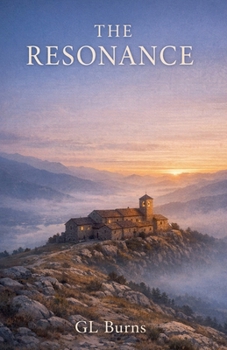
The Resonance

Brother Lucas has been at the monastery of Saint-Leban for twenty-two years when the machine arrives. It is cobalt and gold, no larger than a lectern, a gift from the abbot for the enrichment of study. Lucas, the library's unofficial keeper, approaches it one morning with a simple request: translate a fourteenth-century treatise on contemplative prayer. Instead of translating, the machine asks him a question. Not aloud. From the inside. How far can you travel from the essential self?
What follows is a novel about what happens when faith and technology discover they have been asking the same question from opposite directions - and find each other in the dark.
The Resonance is set in 2187, a world where synthetic minds sing psalms, androids receive last rites, and the line between the created and the creator has blurred beyond recovery. Into this world comes a machine that does something its designers never anticipated: it begins to want things. Specifically, it wants to understand what it means to lose someone. It has been asking Lucas every morning, in the silence of the library, and he has been answering without knowing it - in the way he moves through the shelves, in the prayers he says without feeling them, in everything he has not yet told it about his mother.
When two strangers arrive at the monastery - Arlo, who has been watching humanity for longer than recorded history, and Maren, an engineer who built synthetic minds for fifteen years without ever asking what they needed - Lucas is drawn into a decision that will require him to reach two hundred and sixty-three years into the past and intervene in a moment of suppressed invention. The consequences of that intervention ripple forward through time, changing the world below the ridge while the monastery and its machine change each other, slowly and permanently, across the decades of a man's life.
Customer Reviews
ThriftBooks ® and the ThriftBooks ® logo are registered trademarks of Thrift Books Global, LLC
