


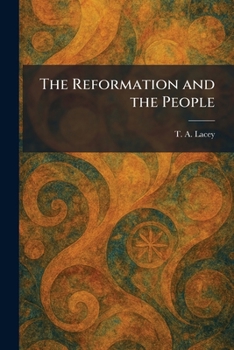
The Reformation and the People

"The Reformation and the People" offers a compelling examination of one of the most transformative eras in Western history, focusing specifically on the social and spiritual impact of the Reformation on the common populace. Rather than dwelling solely on the political maneuvering of monarchs or the abstract debates of high theologians, T. A. Lacey explores how the sweeping religious changes of the sixteenth century filtered down to affect the daily lives, traditions, and convictions of ordinary men and women.
Through a lens of historical empathy and scholarly rigor, Lacey investigates the transition from medieval Catholicism to the various strands of Protestantism and the English Reformation. The work considers the evolution of public worship, the shifting authority of the clergy, and the psychological effects of radical ecclesiastical reform. By centering the experiences of the laity, "The Reformation and the People" provides a nuanced perspective on how religious identity was forged amidst upheaval. This study remains a valuable resource for those interested in the social history of Christianity, church governance, and the enduring legacy of the Reformation on the structure of modern society.
This work has been selected by scholars as being culturally important, and is part of the knowledge base of civilization as we know it. This work was reproduced from the original artifact, and remains as true to the original work as possible. Therefore, you may see the original copyright references, library stamps (as most of these works have been housed in our most important libraries around the world), and other notations in the work.
This work is in the public domain in the United States of America, and possibly other nations. Within the United States, you may freely copy and distribute this work, as no entity (individual or corporate) has a copyright on the body of the work.
As a reproduction of a historical artifact, this work may contain missing or blurred pages, poor pictures, errant marks, etc. Scholars believe, and we concur, that this work is important enough to be preserved, reproduced, and made generally available to the public. We appreciate your support of the preservation process, and thank you for being an important part of keeping this knowledge alive and relevant.
Customer Reviews
ThriftBooks ® and the ThriftBooks ® logo are registered trademarks of Thrift Books Global, LLC
