


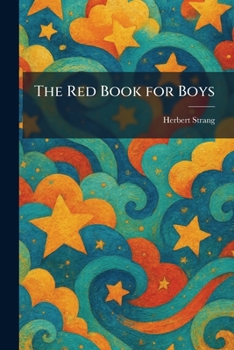
The Red Book for Boys

Select Format
Select Condition 
Book Overview
"The Red Book for Boys" is an engaging collection of adventure stories and informative articles designed to inspire and entertain young readers. Edited by the prolific Herbert Strang, this anthology serves as a vibrant window into the literary landscape of the early twentieth century, offering a diverse array of tales spanning high-seas exploration, daring historical exploits, and the triumphs of sporting life.
The volume features a blend of fictional narratives and factual accounts, focusing on themes of courage, ingenuity, and perseverance. Readers will encounter stories of intrepid travelers in far-off lands, heroic soldiers on the battlefield, and the technical marvels of the era. Each entry is crafted to capture the imagination, fostering a sense of wonder and a thirst for knowledge about the world at large.
As a notable example of the classic boys' annual, "The Red Book for Boys" remains a significant work for those interested in the history of children's literature and the evolving ideals of heroism and adventure. Its varied content ensures a compelling reading experience that highlights the enduring appeal of traditional storytelling and the universal quest for discovery.
This work has been selected by scholars as being culturally important, and is part of the knowledge base of civilization as we know it. This work was reproduced from the original artifact, and remains as true to the original work as possible. Therefore, you may see the original copyright references, library stamps (as most of these works have been housed in our most important libraries around the world), and other notations in the work.
This work is in the public domain in the United States of America, and possibly other nations. Within the United States, you may freely copy and distribute this work, as no entity (individual or corporate) has a copyright on the body of the work.
As a reproduction of a historical artifact, this work may contain missing or blurred pages, poor pictures, errant marks, etc. Scholars believe, and we concur, that this work is important enough to be preserved, reproduced, and made generally available to the public. We appreciate your support of the preservation process, and thank you for being an important part of keeping this knowledge alive and relevant.
Customer Reviews
ThriftBooks ® and the ThriftBooks ® logo are registered trademarks of Thrift Books Global, LLC
