




Select Format
Select Condition 
Book Overview
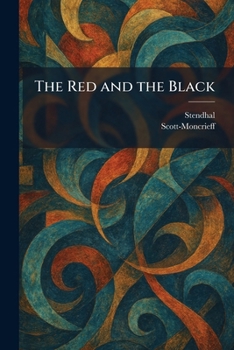
"The Red and the Black" is a masterpiece of 19th-century French literature, renowned for its profound psychological depth and sharp social critique. Set during the Restoration period, the novel follows the meteoric rise and eventual fall of Julien Sorel, a brilliant and ambitious young man from a humble background. Driven by a desire for status and influenced by the legacy of Napoleon, Julien navigates the complex social hierarchies of provincial France and the aristocratic salons of Paris.
Through Julien's experiences as a tutor and a secretary, Stendhal explores the tensions between the "red" of the military and the "black" of the clergy, symbolizing the competing paths to power in a changing society. The narrative is celebrated for its pioneering use of psychological realism, as it delves into the internal conflicts, hypocrisy, and romantic entanglements of its protagonist. With its astute observations on class, politics, and the human heart, "The Red and the Black" remains a definitive portrait of individual ambition clashing with the rigid structures of society.
This classic work offers a compelling examination of the moral and social challenges of its era, making it essential reading for lovers of literary fiction and historical drama.
This work has been selected by scholars as being culturally important, and is part of the knowledge base of civilization as we know it. This work was reproduced from the original artifact, and remains as true to the original work as possible. Therefore, you may see the original copyright references, library stamps (as most of these works have been housed in our most important libraries around the world), and other notations in the work.
This work is in the public domain in the United States of America, and possibly other nations. Within the United States, you may freely copy and distribute this work, as no entity (individual or corporate) has a copyright on the body of the work.
As a reproduction of a historical artifact, this work may contain missing or blurred pages, poor pictures, errant marks, etc. Scholars believe, and we concur, that this work is important enough to be preserved, reproduced, and made generally available to the public. We appreciate your support of the preservation process, and thank you for being an important part of keeping this knowledge alive and relevant.
Customer Reviews
A colourful tale...
It's all there in black and white.
Raffel Does It Again
...a lot like those in Stendhal?s 19th century France.
ThriftBooks® and the ThriftBooks® logo are registered trademarks of Thrift Books Global, LLC
