


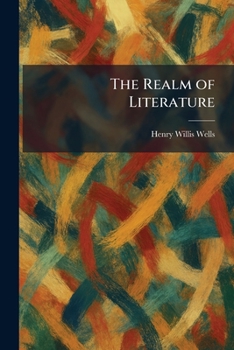
The Realm of Literature

Select Format
Select Condition 
Book Overview
"The Realm of Literature" is a profound exploration into the nature and function of literary art. This work delves into the aesthetic and philosophical foundations that define what literature is and how it resonates with the human experience. The book examines the creative process, the relationship between the author and the reader, and the intrinsic qualities that distinguish enduring literature from mere writing.
By analyzing various forms and genres, Henry Willis Wells seeks to map the boundaries of the literary world, offering insights into how literature captures reality and imagination. Throughout the text, the author addresses the importance of form, style, and meaning, providing a scholarly yet accessible framework for understanding the complexities of storytelling and poetic expression. "The Realm of Literature" serves as an essential guide for those interested in the theoretical aspects of writing, emphasizing the value of literature as a unique realm of human achievement. It remains a significant contribution to literary theory, inviting readers to reconsider the impact and purpose of the written word within a broader cultural and intellectual context.
This work has been selected by scholars as being culturally important, and is part of the knowledge base of civilization as we know it. This work was reproduced from the original artifact, and remains as true to the original work as possible. Therefore, you may see the original copyright references, library stamps (as most of these works have been housed in our most important libraries around the world), and other notations in the work.
This work is in the public domain in the United States of America, and possibly other nations. Within the United States, you may freely copy and distribute this work, as no entity (individual or corporate) has a copyright on the body of the work.
As a reproduction of a historical artifact, this work may contain missing or blurred pages, poor pictures, errant marks, etc. Scholars believe, and we concur, that this work is important enough to be preserved, reproduced, and made generally available to the public. We appreciate your support of the preservation process, and thank you for being an important part of keeping this knowledge alive and relevant.
Customer Reviews
ThriftBooks ® and the ThriftBooks ® logo are registered trademarks of Thrift Books Global, LLC
