
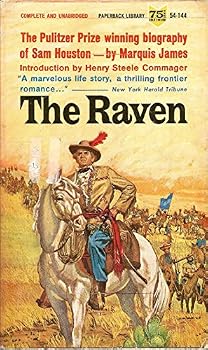
Winner of the Pulitzer Prize for Biography, "The Raven" is a definitive and gripping account of the life of Sam Houston, one of the most enigmatic and influential figures in American history. Marquis James masterfully traces Houston's turbulent journey from his early days among the Cherokee, who gave him the nickname 'The Raven, ' to his pivotal roles as the governor of two states and the president of the Republic of Texas.
This meticulously researched narrative delves into Houston's complex character, exploring his military prowess during the Texas Revolution and his political maneuvering as he sought to bring Texas into the Union. James captures the essence of the 19th-century American West, illustrating the clashes between cultures and the expansionist fervor of the era. The work explores themes of leadership, honor, and resilience, portraying Houston not just as a statesman but as a flawed human being driven by ambition and a deep sense of justice.
As a cornerstone of American biographical literature, "The Raven" remains an essential read for anyone interested in the formation of Texas and the broader landscape of United States history. James's evocative prose brings the frontier to life, providing a vivid window into a transformative period that helped shape the modern nation.
This work has been selected by scholars as being culturally important, and is part of the knowledge base of civilization as we know it. This work was reproduced from the original artifact, and remains as true to the original work as possible. Therefore, you may see the original copyright references, library stamps (as most of these works have been housed in our most important libraries around the world), and other notations in the work.
This work is in the public domain in the United States of America, and possibly other nations. Within the United States, you may freely copy and distribute this work, as no entity (individual or corporate) has a copyright on the body of the work.
As a reproduction of a historical artifact, this work may contain missing or blurred pages, poor pictures, errant marks, etc. Scholars believe, and we concur, that this work is important enough to be preserved, reproduced, and made generally available to the public. We appreciate your support of the preservation process, and thank you for being an important part of keeping this knowledge alive and relevant.

