


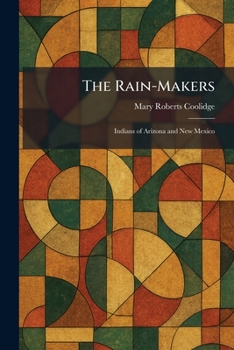
The Rain-Makers: Indians of Arizona and New Mexico

"The Rain-Makers: Indians of Arizona and New Mexico" is an extensive ethnographic study of the indigenous cultures residing in the American Southwest. This work provides a thorough examination of the social, religious, and domestic lives of various tribes, including the Pueblo, Navajo, and Apache peoples. The narrative focuses significantly on the spiritual significance of water in a desert landscape, detailing the intricate rain-making ceremonies and rituals that define the rhythmic cycles of tribal existence.
The text covers a wide range of topics, from the architecture of the pueblos and the intricacies of weaving and pottery to the governance systems and historical traditions of the Southwest's inhabitants. Mary Roberts Coolidge observes the profound connection between the people and their environment, documenting their myths, legends, and traditional knowledge. "The Rain-Makers: Indians of Arizona and New Mexico" stands as a significant contribution to the field of anthropology and Native American studies, offering readers a detailed window into the enduring traditions and cultural resilience of the Arizona and New Mexico tribes during the early twentieth century.
This work has been selected by scholars as being culturally important, and is part of the knowledge base of civilization as we know it. This work was reproduced from the original artifact, and remains as true to the original work as possible. Therefore, you may see the original copyright references, library stamps (as most of these works have been housed in our most important libraries around the world), and other notations in the work.
This work is in the public domain in the United States of America, and possibly other nations. Within the United States, you may freely copy and distribute this work, as no entity (individual or corporate) has a copyright on the body of the work.
As a reproduction of a historical artifact, this work may contain missing or blurred pages, poor pictures, errant marks, etc. Scholars believe, and we concur, that this work is important enough to be preserved, reproduced, and made generally available to the public. We appreciate your support of the preservation process, and thank you for being an important part of keeping this knowledge alive and relevant.
Customer Reviews
ThriftBooks ® and the ThriftBooks ® logo are registered trademarks of Thrift Books Global, LLC
