


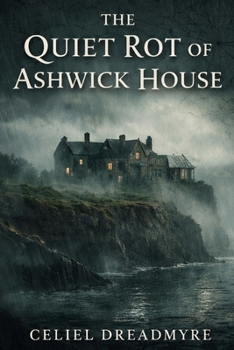
The Quiet Rot of Ashwick House
No Customer Reviews

Maribel Thorne was once trusted with fragile things. An archivist with a rare gift for reading paper, ink, and provenance, she built a career on precision-until a forgery scandal destroyed her standing and left her professionally stranded. When she inherits Ashwick House, a crumbling estate on a lonely stretch of coast, it seems less like fortune than exile. But Ashwick is not merely decayed. The house resists measurement. Rooms change meaning depending on who names them. The village remembers Maribel doing things she has not done. Beneath the house, hidden behind sealed masonry, she discovers an archive left by earlier witnesses: a monk who could not fix the coastline, a doctor who studied false memory, a widow haunted by almost-perfect returns, a performer who learned the house needed an audience, and a child who understood the danger before any of them. Each record points toward the same terrible rule: Ashwick feeds on coherence. The more neatly its story is told, the stronger it becomes. As the house begins to turn Maribel's own discipline against her, she realizes survival will require a final act of refusal. She cannot preserve the truth. She cannot complete the account. She can only break the record before the house learns how to keep her too. The Quiet Rot of Ashwick House is an atmospheric gothic horror novel about memory, erasure, grief, bureaucracy, and the terrifying cost of making the wrong story hold.
Format:Paperback
Language:English
ISBN:B0GXVNK529
ISBN13:9798258071835
Release Date:April 2026
Publisher:Independently published
Length:217 Pages
Weight:0.66 lbs.
Dimensions:0.5" x 6.0" x 9.0"
Customer Reviews
0 rating
Copyright © 2026 Thriftbooks.com
Terms of Use | Privacy Policy | Do Not Sell/Share My Personal Information | Cookie Notice | Cookie Preferences | Accessibility Statement
ThriftBooks ® and the ThriftBooks ® logo are registered trademarks of Thrift Books Global, LLC
ThriftBooks ® and the ThriftBooks ® logo are registered trademarks of Thrift Books Global, LLC
