


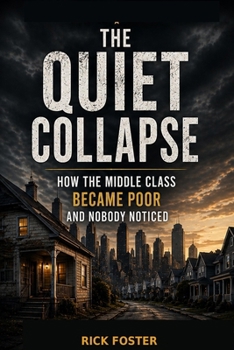
The Quiet Collapse: How the Middle Class Became Poor and Nobody Noticed

"We were poor, and we knew it. That was my advantage."
As a boy in a condemned shotgun house, Rick Foster understood what his life was in a way many adults do not: his family was poor. There was no illusion of being "middle-class but struggling." Poverty had a name, a smell, a texture. It could be seen and counted.
Decades later, as a professor and pastor, Foster sits with families whose lives look "normal" from the sidewalk-decent houses, late-model cars, busy kids-and hears the same fear he grew up with: We can't keep this up. They are anxious, overworked, and one emergency from disaster, yet almost no one calls it poverty. They call it "trying to stay middle-class."
The Quiet Collapse traces how the American middle class quietly fell apart without funerals or headlines. Drawing on personal story, historical insight, and front-line experience with students and families, Foster shows:
how wages, debt, housing, and healthcare slowly rewrote the rules of stability
how we were trained to love comfort, convenience, and image more than margin and community
why the disappearance of the middle class is a symptom, not the root disease
why purely economic fixes can't heal what is fundamentally a crisis of desire, honesty, and what we're willing to sacrifice
This is not another book telling you to hustle harder or budget better. It is a book that gives language to what you already feel in your bones: the old story is gone.
In its final chapters, The Quiet Collapse offers a different kind of "what now"
how to name your situation without shame
how to redefine "enough" in a world that worships "more"
how to refuse the cage of comfort without glorifying struggle
how to find a few people to tell the truth with, so you are not alone in the aftermath
If you have ever wondered why you are working harder than your parents and feeling less secure, this book is for you. It will not fix the mortgage rate or erase your student loans. But it will help you stop fighting the wrong enemy, stop carrying shame that isn't yours, and begin living as a sane, honest human being in the world we actually inhabit.
You are not failing at middle-class life. You are surviving the quiet collapse.
Customer Reviews
ThriftBooks ® and the ThriftBooks ® logo are registered trademarks of Thrift Books Global, LLC
