


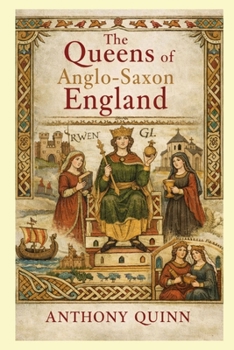
The Queens of Anglo-Saxon England

The Queens of Anglo-Saxon England by Anthony Quinn
Between 600 and 1066, the women of England's royal courts stood at the crossroads of power, faith, diplomacy, and dynastic survival. Yet their stories are often fragmented, misinterpreted, or overshadowed by the kings they married.
The Queens of Anglo-Saxon England reconstructs the lives and roles of early English royal women using chronicles, charters, coinage, archaeology, and saints' lives carefully separating legend from evidence. Rather than repeating myths, this book asks a deeper question: What did queens actually do in Anglo-Saxon England?
Inside, readers will discover:
How queenship evolved from informal consortship to consecrated office
Why some royal wives were never called regina and why that matters
The political and religious influence of Bertha of Kent in England's conversion
The extraordinary military and administrative leadership of thelfl d
The significance of lfthryth, England's first consecrated queen
The international diplomacy and property strategy of Emma of Normandy
The remarkable coinage of Cynethryth, the only Anglo-Saxon queen depicted on currency
Drawing on evidence from the Anglo-Saxon Chronicle, charters, witness lists, and burial archaeology, this study presents a nuanced and methodologically transparent account of queenship across Mercia, Northumbria, Wessex, and Kent.
Rather than romanticizing the past, Anthony Quinn demonstrates how power could be informal yet significant, sacred yet political, visible yet untitled. Through careful historical analysis, the book distinguishes between documented fact, reasonable inference, and later legend offering readers both narrative insight and scholarly rigor.
Perfect for readers interested in:
Early medieval England
Women in power before 1066
Anglo-Saxon political culture
The history of queenship
Conversion-era Britain
Medieval law, landholding, and church patronage
This is not just a book about queens it is a book about how we reconstruct women's power from fragmentary evidence.
Related Subjects
HistoryCustomer Reviews
ThriftBooks ® and the ThriftBooks ® logo are registered trademarks of Thrift Books Global, LLC
