


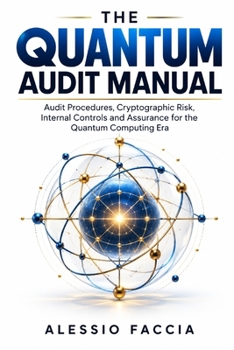
THE QUANTUM AUDIT MANUAL: Audit Procedures, Cryptographic Risk, Internal Controls and Assurance for the Quantum Computing Era

Quantum computing is moving from specialist research into a strategic issue for audit, finance, cybersecurity, risk management and corporate governance. Organisations depend on encryption, digital signatures, certificates, key management, secure cloud services, payment infrastructure and trusted digital identities. Future quantum capability places pressure on several public-key cryptographic systems, while post-quantum migration demands years of discovery, investment, testing, supplier coordination and control redesign.
The Quantum Audit Manual gives internal auditors, external auditors, accountants, finance professionals, risk managers, cybersecurity teams and technology leaders a practical framework for assessing quantum-related exposure and auditing organisational readiness.
The book begins with the foundations auditors need to understand quantum computing, including qubits, superposition, entanglement, quantum processing, Shor's algorithm, Grover's algorithm and their relevance to financial systems. It then connects these concepts with cryptographic exposure across banking, accounting, payments, cloud infrastructure, digital signatures, software, data archives and corporate systems.
Detailed chapters examine public-key vulnerability, post-quantum cryptography, long-term data confidentiality, digital signature risk and quantum-ready internal controls. The audit sections convert these topics into practical procedures for risk assessment, audit planning, cryptographic inventory testing, key and certificate review, post-quantum migration testing, third-party assurance, cloud supplier review, evidence collection, working papers and formal reporting.
Readers also gain a structured approach to board oversight, management accountability, financial reporting exposure, operational resilience, cybersecurity, maturity assessment, control testing and audit programme design. A full applied case study demonstrates how an audit team moves from scoping and evidence gathering through findings, management actions, reporting and follow-up.
The book addresses questions every quantum-aware organisation needs to answer. Which systems depend on vulnerable cryptography? Which data requires protection for many years? Who owns the keys and certificates? Which suppliers control migration timing? Does the organisation possess reliable inventories? Do migration plans include production testing and recovery? Does board reporting reflect real implementation? Has finance funded the systems that require replacement?
The Quantum Audit Manual focuses on evidence and accountability. It avoids speculative forecasts and places attention on present governance, present controls and present management decisions. Readers receive a professional method for turning quantum uncertainty into auditable risk, measurable control objectives, documented testing and actionable remediation.
Ideal for internal audit, external audit, accounting, banking, financial services, cybersecurity, risk management, compliance, technology assurance, cloud governance, post-quantum cryptography and executive education.
Customer Reviews
ThriftBooks ® and the ThriftBooks ® logo are registered trademarks of Thrift Books Global, LLC
