


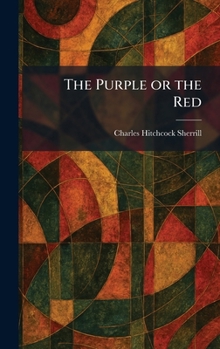
The Purple or the Red

"The Purple or the Red" is a compelling political analysis and travelogue that explores the turbulent geopolitical landscape of post-World War I Europe. Written by Charles Hitchcock Sherrill, a seasoned diplomat and observer of international affairs, this work examines the ideological struggle between traditional monarchy-symbolized by the "Purple"-and the rising tide of Bolshevism, or the "Red."
Through a series of firsthand accounts and interviews with various European sovereigns and political figures, Sherrill investigates the role of kings and queens as stabilizing forces in a continent reeling from the destruction of the Great War. The text evaluates the practical and symbolic utility of the crown in resisting radical revolutionary movements and maintaining national unity. "The Purple or the Red" offers a unique contemporary perspective on the social and political anxieties of the early 1920s, providing readers with deep insights into the tension between old-world traditions and the modern push for radical social change. It remains a significant historical document for those interested in the evolution of European governance and the historical conflict between conservative institutions and revolutionary ideologies during the interwar period.
This work has been selected by scholars as being culturally important, and is part of the knowledge base of civilization as we know it. This work was reproduced from the original artifact, and remains as true to the original work as possible. Therefore, you may see the original copyright references, library stamps (as most of these works have been housed in our most important libraries around the world), and other notations in the work.
This work is in the public domain in the United States of America, and possibly other nations. Within the United States, you may freely copy and distribute this work, as no entity (individual or corporate) has a copyright on the body of the work.
As a reproduction of a historical artifact, this work may contain missing or blurred pages, poor pictures, errant marks, etc. Scholars believe, and we concur, that this work is important enough to be preserved, reproduced, and made generally available to the public. We appreciate your support of the preservation process, and thank you for being an important part of keeping this knowledge alive and relevant.
Customer Reviews
ThriftBooks ® and the ThriftBooks ® logo are registered trademarks of Thrift Books Global, LLC
