


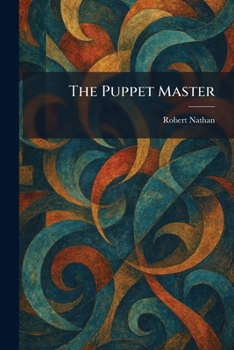
The Puppet Master

Select Format
Select Condition 
Book Overview
"The Puppet Master" is a delicate and philosophical fable that explores the intersection of imagination, reality, and the human spirit. The narrative centers on Papa Jonas, a humble puppet maker whose workshop becomes a stage for profound existential questions. His creations, including the thoughtful Aristide and the lovely Anaxagoras, possess a depth of emotion that mirrors the complexities of their human counterparts. Through their interactions and inner lives, the story delves into themes of love, longing, and the search for meaning in a world where one may not always be in control of their own strings.
Robert Nathan's work is celebrated for its whimsical tone and poetic prose, blending gentle satire with a meditative outlook on life. By giving voice to the inanimate, the author invites readers to reflect on the illusions that shape our lives and the quiet beauty found in simple existence. "The Puppet Master" stands as a classic example of early 20th-century literary fantasy, offering a timeless exploration of the heart and the subtle, unseen forces that guide our destinies.
This work has been selected by scholars as being culturally important, and is part of the knowledge base of civilization as we know it. This work was reproduced from the original artifact, and remains as true to the original work as possible. Therefore, you may see the original copyright references, library stamps (as most of these works have been housed in our most important libraries around the world), and other notations in the work.
This work is in the public domain in the United States of America, and possibly other nations. Within the United States, you may freely copy and distribute this work, as no entity (individual or corporate) has a copyright on the body of the work.
As a reproduction of a historical artifact, this work may contain missing or blurred pages, poor pictures, errant marks, etc. Scholars believe, and we concur, that this work is important enough to be preserved, reproduced, and made generally available to the public. We appreciate your support of the preservation process, and thank you for being an important part of keeping this knowledge alive and relevant.
Customer Reviews
ThriftBooks ® and the ThriftBooks ® logo are registered trademarks of Thrift Books Global, LLC
