


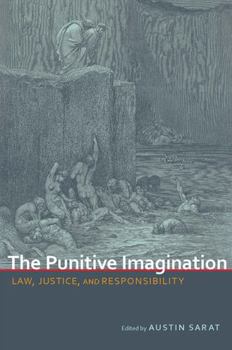
The Punitive Imagination: Law, Justice, and Responsibility
No Customer Reviews

From the Gospel of Matthew to numerous US Supreme Court justices, many literary and legal sources have observed that how a society metes out punishment reveals core truths about its character. The Punitive Imagination is a collection of essays that engages and contributes to debates about the purposes and meanings of punishment in the United States. The Punitive Imagination examines some of the critical assumptions that frame America's approach to punishment. It explores questions such as:
- What is the place of concern for human dignity in our prevailing ideologies of punishment?
- Can we justly punish the socially disadvantaged?
- What assumptions about persons, social institutions, and the ordering of social space provide the basis for American punitiveness?
- Who, if anyone, can be held responsible for excessively punitive criminal sentences?
- How does punishment depend on prevailing views of free will, responsibility, desert, blameworthiness?
- Where/how are those views subject to challenge in our punitive practices? As Sarat posits in his introduction, the way a society punishes demonstrates its commitment to standards of judgment and justice, its distinctive views of blame and responsibility, its understandings of mercy and forgiveness, and its particular ways of responding to evil. He goes on to discuss the history of punishment in the United States and what it reveals about assumptions made about persons that "undergird" the American system of punishment. The five additional contributors to The Punitive Imagination seek to illuminate what American practices of punishment tell us about who we are as a nation. Synthesizing cultural, sociological, philosophical, and legal perspectives, they offer a distinctive take on the meaning of punishment in America.
- What is the place of concern for human dignity in our prevailing ideologies of punishment?
- Can we justly punish the socially disadvantaged?
- What assumptions about persons, social institutions, and the ordering of social space provide the basis for American punitiveness?
- Who, if anyone, can be held responsible for excessively punitive criminal sentences?
- How does punishment depend on prevailing views of free will, responsibility, desert, blameworthiness?
- Where/how are those views subject to challenge in our punitive practices? As Sarat posits in his introduction, the way a society punishes demonstrates its commitment to standards of judgment and justice, its distinctive views of blame and responsibility, its understandings of mercy and forgiveness, and its particular ways of responding to evil. He goes on to discuss the history of punishment in the United States and what it reveals about assumptions made about persons that "undergird" the American system of punishment. The five additional contributors to The Punitive Imagination seek to illuminate what American practices of punishment tell us about who we are as a nation. Synthesizing cultural, sociological, philosophical, and legal perspectives, they offer a distinctive take on the meaning of punishment in America.
Format:Paperback
Language:English
ISBN:0817357998
ISBN13:9780817357993
Release Date:October 2014
Publisher:University Alabama Press
Length:200 Pages
Weight:0.70 lbs.
Dimensions:0.8" x 5.9" x 8.9"
Related Subjects
LawCustomer Reviews
0 rating
Copyright © 2026 Thriftbooks.com
Terms of Use | Privacy Policy | Do Not Sell/Share My Personal Information | Cookie Policy | Cookie Preferences | Accessibility Statement
ThriftBooks ® and the ThriftBooks ® logo are registered trademarks of Thrift Books Global, LLC
ThriftBooks ® and the ThriftBooks ® logo are registered trademarks of Thrift Books Global, LLC
