


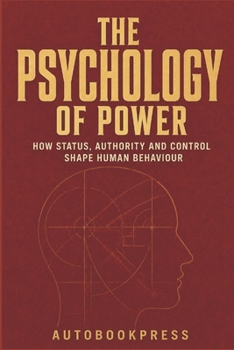
The Psychology of Power: How Status, Authority and Control Shape Human Behaviour (The Human Systems Series)
No Customer Reviews

Power rarely needs to announce itself. Often, its presence is enough. When someone with authority enters a room, language changes. Bad news becomes easier to soften. Doubt disappears from forecasts. People begin measuring what they say against what power might reward, punish or remember. Why do human beings repeatedly build hierarchies? What separates dominance from prestige? Why does status remain desirable even after material needs have been met? How does gaining power affect confidence, empathy, risk and judgement? And why do ordinary people obey harmful instructions when no immediate force is being used? The Psychology of Power examines the forces that shape life above and below the social ladder. Inside, you will discover: - How authority, status, control, expertise and influence differ
- Why dominance rises through fear while prestige rises through admiration
- How power changes attention, behaviour and the perception of risk
- Why confidence can increase faster than accuracy
- How legitimacy turns commands into accepted obligations
- Why harmful outcomes become easier when responsibility is divided
- How power operates in workplaces, households, gatekeeping systems and algorithms
- What makes resistance possible
- How authority can remain effective while still being open to correction This is not a manual for manipulating people or winning status games. It is a guide to seeing power clearly, including the power we hold, the power we live beneath and the systems we help sustain. Clear, thoughtful and practical, The Psychology of Power is the third book in the Human Systems series. It can be read independently or alongside The Architecture of Influence and The Attention Economy.
- Why dominance rises through fear while prestige rises through admiration
- How power changes attention, behaviour and the perception of risk
- Why confidence can increase faster than accuracy
- How legitimacy turns commands into accepted obligations
- Why harmful outcomes become easier when responsibility is divided
- How power operates in workplaces, households, gatekeeping systems and algorithms
- What makes resistance possible
- How authority can remain effective while still being open to correction This is not a manual for manipulating people or winning status games. It is a guide to seeing power clearly, including the power we hold, the power we live beneath and the systems we help sustain. Clear, thoughtful and practical, The Psychology of Power is the third book in the Human Systems series. It can be read independently or alongside The Architecture of Influence and The Attention Economy.
Format:Paperback
Language:English
ISBN:B0HFSL6GQ8
ISBN13:9798193646433
Release Date:August 2026
Publisher:Independently published
Length:450 Pages
Weight:1.19 lbs.
Dimensions:9.0" x 1.1" x 6.0"
Customer Reviews
0 rating
Copyright © 2026 Thriftbooks.com
Terms of Use | Privacy Policy | Do Not Sell/Share My Personal Information | Cookie Policy | Cookie Preferences | Accessibility Statement
ThriftBooks ® and the ThriftBooks ® logo are registered trademarks of Thrift Books Global, LLC
ThriftBooks ® and the ThriftBooks ® logo are registered trademarks of Thrift Books Global, LLC
