


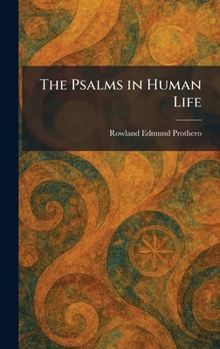
The Psalms in Human Life

Select Format
Select Condition 
Book Overview
"The Psalms in Human Life" is a profound exploration of the enduring impact of the Book of Psalms on human history and personal experience. This work traces the spiritual and cultural influence of these ancient hymns across centuries, demonstrating how they have provided comfort, guidance, and inspiration to individuals from all walks of life-from monarchs and martyrs to scholars and laborers.
Rowland E. Prothero meticulously details the role of the Psalms in significant historical events and the lives of notable figures, illustrating their universal appeal and timeless relevance. By examining the context in which these verses were used, the author provides a rich tapestry of religious and social history, showing how the language of the Psalms has shaped the emotional and spiritual landscape of Western civilization. Readers interested in biblical studies, Christian history, and the intersection of faith and life will find this volume to be an invaluable resource. The book serves as both a scholarly historical survey and a testament to the power of religious literature to transcend time and connect the human spirit across the ages.
This work has been selected by scholars as being culturally important, and is part of the knowledge base of civilization as we know it. This work was reproduced from the original artifact, and remains as true to the original work as possible. Therefore, you may see the original copyright references, library stamps (as most of these works have been housed in our most important libraries around the world), and other notations in the work.
This work is in the public domain in the United States of America, and possibly other nations. Within the United States, you may freely copy and distribute this work, as no entity (individual or corporate) has a copyright on the body of the work.
As a reproduction of a historical artifact, this work may contain missing or blurred pages, poor pictures, errant marks, etc. Scholars believe, and we concur, that this work is important enough to be preserved, reproduced, and made generally available to the public. We appreciate your support of the preservation process, and thank you for being an important part of keeping this knowledge alive and relevant.
Customer Reviews
ThriftBooks ® and the ThriftBooks ® logo are registered trademarks of Thrift Books Global, LLC
