


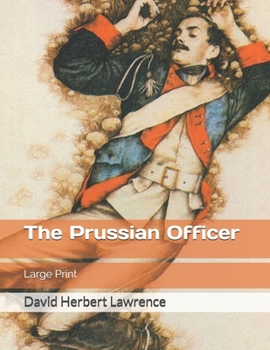
The Prussian Officer: Large Print
No Customer Reviews

The first narrative in the collection is "The Prussian Officer", which tells of a Captain and his orderly. Having wasted his youth gambling, the captain has been left with only his military career, and though he has taken on mistresses throughout his life, he remains single. His young orderly is involved in a relationship with a young woman, and the captain, feeling sexual tension towards the young man, prevents the orderly from engaging in the relationship by taking up his evenings. These evenings lead to the captain abusing his orderly and leaving large, painful bruises on his thighs, making it hard for the orderly to walk. Whilst isolated in a forest during manoeuvres, the orderly takes out murderous revenge on the captain, but finds himself in a daze seemingly due both to the pain of the bruises and thirst. The orderly eventually collapses and dies in the hospital shortly thereafter. The corpses of the two men lay side by side. David Herbert Lawrence (11 September 1885 - 2 March 1930) was an important and controversial English writer of the 20th century, whose prolific and diverse output included novels, short stories, poems, plays, essays, travel books, paintings, translations, literary criticism and personal letters. His collected works represent an extended reflection upon the dehumanizing effects of modernity and industrialisation. In them, Lawrence confronts issues relating to emotional health and vitality, spontaneity, sexuality, and instinctive behaviour.Lawrence's unsettling opinions earned him many enemies and he endured hardships, official persecution, censorship and misrepresentation of his creative work throughout the second half of his life, much of which he spent in a voluntary exile he called his "savage pilgrimage." At the time of his death, his public reputation was that of a pornographer who had wasted his considerable talents. E. M. Forster, in an obituary notice, challenged this widely held view, describing him as "the greatest imaginative novelist of our generation." Later, the influential Cambridge critic F. R. Leavis championed both his artistic integrity and his moral seriousness, placing much of Lawrence's fiction within the canonical "great tradition" of the English novel. He is now generally valued as a visionary thinker and a significant representative of modernism in English literature, although some feminists object to the attitudes toward women and sexuality found in his works.
Format:Paperback
Language:English
ISBN:1706599064
ISBN13:9781706599067
Release Date:January 1
Publisher:Independently Published
Length:26 Pages
Weight:0.19 lbs.
Dimensions:0.1" x 8.5" x 11.0"
Customer Reviews
0 rating
Copyright © 2026 Thriftbooks.com Terms of Use
| Privacy Policy | Do Not
Sell/Share My Personal Information | Cookie Policy | Cookie Preferences | Accessibility Statement
ThriftBooks® and the ThriftBooks® logo are registered trademarks of Thrift Books Global, LLC
ThriftBooks® and the ThriftBooks® logo are registered trademarks of Thrift Books Global, LLC
