


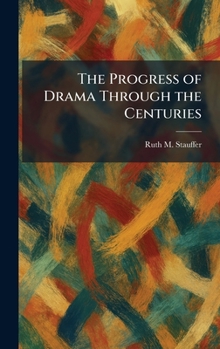
The Progress of Drama Through the Centuries

Select Format
Select Condition 
Book Overview
"The Progress of Drama Through the Centuries" is a comprehensive study of the evolution of theatrical literature, tracing the development of the stage from its ancient origins through the early 20th century. Ruth M. Stauffer provides a scholarly yet accessible overview of how dramatic forms, themes, and techniques have shifted across different eras and cultures, offering readers a clear narrative of the medium's growth.
The work examines the trajectory of the dramatic arts, highlighting significant milestones from the classical tragedies of Greece to the emerging modernisms of the 1920s. By analyzing the intellectual and social currents that influenced playwrights throughout history, the book illustrates how the theater has consistently mirrored the human condition and the changing values of society. It serves as both a historical guide and a literary survey, emphasizing the continuity of artistic expression over thousands of years.
Designed for students, educators, and lovers of the performing arts, "The Progress of Drama Through the Centuries" underscores the enduring relevance of the stage. This volume is an essential resource for understanding the literary foundations of the theater and the historical context of the world's most influential plays.
This work has been selected by scholars as being culturally important, and is part of the knowledge base of civilization as we know it. This work was reproduced from the original artifact, and remains as true to the original work as possible. Therefore, you may see the original copyright references, library stamps (as most of these works have been housed in our most important libraries around the world), and other notations in the work.
This work is in the public domain in the United States of America, and possibly other nations. Within the United States, you may freely copy and distribute this work, as no entity (individual or corporate) has a copyright on the body of the work.
As a reproduction of a historical artifact, this work may contain missing or blurred pages, poor pictures, errant marks, etc. Scholars believe, and we concur, that this work is important enough to be preserved, reproduced, and made generally available to the public. We appreciate your support of the preservation process, and thank you for being an important part of keeping this knowledge alive and relevant.
Customer Reviews
ThriftBooks ® and the ThriftBooks ® logo are registered trademarks of Thrift Books Global, LLC
