


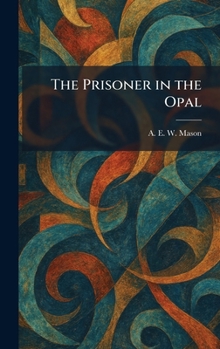
The Prisoner in the Opal

"The Prisoner in the Opal" is a gripping mystery novel featuring A.E.W. Mason's renowned French detective, Inspector Hanaud. Set against the atmospheric backdrop of a chateau in the French countryside, the story unfolds when a series of bizarre and chilling events leads to the discovery of a gruesome crime. Hanaud, accompanied by his friend Mr. Ricardo, is called in to investigate a case that blends traditional detective work with elements of the occult and ritualistic practices.
The narrative explores themes of hidden evil and the dual nature of human identity, symbolized by the "opal" of the title. As Hanaud delves deeper into the lives of the chateau's inhabitants, he uncovers evidence of secret societies and sinister ceremonies. Mason masterfully balances a classic "whodunit" structure with a darker, more unsettling tone, making this work a standout in early twentieth-century crime fiction.
Known for its intricate plot and the charismatic presence of Inspector Hanaud, "The Prisoner in the Opal" remains a significant contribution to the detective genre. It showcases Mason's ability to craft suspenseful storytelling and complex character dynamics, offering readers a sophisticated and eerie mystery that challenges the boundaries of conventional crime writing.
This work has been selected by scholars as being culturally important, and is part of the knowledge base of civilization as we know it. This work was reproduced from the original artifact, and remains as true to the original work as possible. Therefore, you may see the original copyright references, library stamps (as most of these works have been housed in our most important libraries around the world), and other notations in the work.
This work is in the public domain in the United States of America, and possibly other nations. Within the United States, you may freely copy and distribute this work, as no entity (individual or corporate) has a copyright on the body of the work.
As a reproduction of a historical artifact, this work may contain missing or blurred pages, poor pictures, errant marks, etc. Scholars believe, and we concur, that this work is important enough to be preserved, reproduced, and made generally available to the public. We appreciate your support of the preservation process, and thank you for being an important part of keeping this knowledge alive and relevant.
Customer Reviews
ThriftBooks ® and the ThriftBooks ® logo are registered trademarks of Thrift Books Global, LLC
