


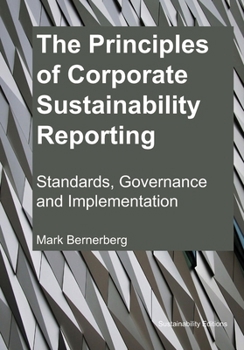
The Principles of Corporate Sustainability Reporting: Standards, Governance and Implementation

Details
Format: eBook
Copy Protection: No
Pages: 173
File Size: 1.2 MB
Edition: 1st. edition
Language: English
Author: Mark Bernerberg
Targetgroups
This work is aimed the sustainability officers, legal experts, corporate executives, compliance officers, asset managers, portfolio managers, financial analyst, investors, board members, auditors, consultants.
Description:
In an era where sustainability has transitioned from an aspirational ideal to a fundamental necessity, the role of corporate governance and regulatory compliance in sustainability reporting has never been more critical. As environmental, social, and governance (ESG) concerns become central to global economic and policy frameworks, businesses, investors, and regulatory bodies must navigate an increasingly complex landscape of reporting obligations and strategic imperatives. This book serves as a comprehensive academic resource, offering a structured and analytical examination of sustainability reporting within the broader framework of corporate governance and regulatory compliance.
The significance of sustainability reporting extends beyond corporate social responsibility; it is now an essential mechanism for ensuring transparency, accountability, and long-term value creation. Companies are required not only to disclose their environmental and social impacts but also to embed sustainability into their operational, financial, and strategic decision-making processes. In this context, sustainability reporting acts as both a compliance requirement and a strategic tool, guiding organizations towards responsible and sustainable business practices.
This book provides a systematic analysis of the principles, legal frameworks, and methodologies governing sustainability disclosure. It critically examines the role of regulatory bodies, industry standards, and evolving best practices, equipping scholars, policymakers, and corporate professionals with a nuanced understanding of the subject. Furthermore, it underscores the necessity of harmonizing sustainability reporting with established corporate governance structures, ensuring that disclosures are not mere formalities but integral components of business strategy.
A key strength of this work lies in its rigorous examination of sustainability metrics, materiality assessments, and due diligence obligations. By integrating discussions on financial and non-financial reporting standards, the book bridges the gap between theoretical constructs and practical applications, making it a valuable resource for both academics and practitioners. The emphasis on compliance with jurisdictional regulations, including the Swiss Code of Obligations and international reporting frameworks, ensures that this book remains highly relevant in the current regulatory landscape.
Customer Reviews
ThriftBooks® and the ThriftBooks® logo are registered trademarks of Thrift Books Global, LLC
