


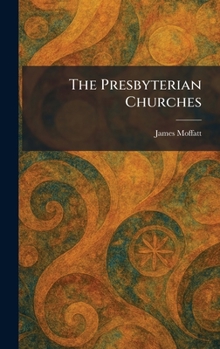
The Presbyterian Churches

Select Format
Select Condition 
Book Overview
"The Presbyterian Churches" offers a comprehensive exploration of the origins, development, and global spread of the Presbyterian tradition. Written by the renowned theologian and scholar James Moffatt, this work provides an insightful overview of the ecclesiastical structures, theological foundations, and historical milestones that have shaped this influential branch of Protestantism.
From its roots in the Reformation and the profound influence of John Calvin to its specific manifestations in Scotland and across the world, the book examines how Presbyterianism established its unique form of church government and its steadfast commitment to representative leadership. Moffatt's clear and scholarly approach illuminates the challenges and triumphs faced by these communities through the centuries, making it an essential resource for students of church history and those interested in the evolution of Christian denominations.
This volume serves as both a historical record and a theological guide, capturing the spirit and resilience of the Presbyterian faith and its impact on the broader religious landscape. It remains a vital contribution to the understanding of the Reformed tradition and its organizational principles.
This work has been selected by scholars as being culturally important, and is part of the knowledge base of civilization as we know it. This work was reproduced from the original artifact, and remains as true to the original work as possible. Therefore, you may see the original copyright references, library stamps (as most of these works have been housed in our most important libraries around the world), and other notations in the work.
This work is in the public domain in the United States of America, and possibly other nations. Within the United States, you may freely copy and distribute this work, as no entity (individual or corporate) has a copyright on the body of the work.
As a reproduction of a historical artifact, this work may contain missing or blurred pages, poor pictures, errant marks, etc. Scholars believe, and we concur, that this work is important enough to be preserved, reproduced, and made generally available to the public. We appreciate your support of the preservation process, and thank you for being an important part of keeping this knowledge alive and relevant.
Customer Reviews
ThriftBooks ® and the ThriftBooks ® logo are registered trademarks of Thrift Books Global, LLC
