
Skip to content
Scan a barcode
Scan
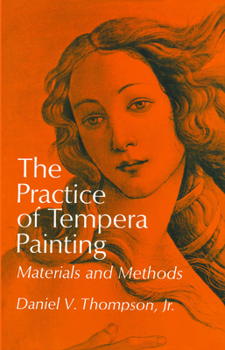
Paperback The Practice of Tempera Painting: Materials and Methods Book

ISBN: 0486203433

ISBN13: 9780486203430

The Practice of Tempera Painting: Materials and Methods

Select Format

Select Condition ThriftBooks Help Icon

Recommended

Format: Paperback

Condition: Like New

$7.69
Save $4.26!
List Price $11.95
Almost Gone, Only 1 Left!
Save to List

Book Overview

Tempera painting, the method in which colors are mixed with some binding material other than oil (primarily egg yolk), is the earliest type of painting known to man. The wall paintings of ancient Egypt and Babylon are tempera, as are many of the paintings of Giotto, Lippi, Botticelli, Raphael, Titian, Tintoretto, and many other masters. But in spite of the time-proven excellence of this technique -- which boasts many clear advantages over oil paint -- it does not receive the degree of attention from modern painters that it deserves.
Part of the explanation for this neglect, surely, is the absence of sufficient information about the materials and procedures involved in tempera painting. The present volume, in fact, is virtually the only complete, authoritative, step-by-step treatment of the subject in the English language, D.V. Thompson wrote this book after an exhaustive study, over many years, of countless medieval and Renaissance manuscripts in the British Museum and elsewhere, and is unquestionably the world's leading authority on tempera materials and processes.
Beginning with an introductory chapter on the uses and limitations of tempera, the author covers such topics as the choice of material for the panel; propensities of various woods; preparing the panel for gilding; making the gesso mixture; methods of applying the gesso; planning the design of a tempera painting; use of tinted papers; application of metals to the panel; tools for gliding; handling and laying gold; combination gold and silver leafing; pigments and brushes; choice of palette; mixing the tempera; tempering and handling the colors; techniques of the actual painting; mordant gilding; permanence of tempera painting; varnishing; and artificial emulsion painting. The drawings and diagrams, illustrating the various materials and techniques, infinitely increase the clarity of the discussions.
As a careful exposition of all aspects of authentic tempera painting, including many of the possible modern uses for this ancient method, this book actually stands alone. No one who is interested in tempera painting as a serious pursuit can afford to be without it.

Customer Reviews

5 ratings

Recommended for all artists, not just "yeggs"

This luminous book is a real introduction to the "indirect" method of painting: the use of translucent layers to build the glow seen in both Fra Angelico's pure tempera and Rembrandt's oils. Many beginning artists have a "mental model" of painting *alla prima* on a white primed canvas, but this method only dates to the Impressionists. By the 1840s, the older method, of starting out in monochrome with warm pigments and a middle toned ground, had produced a by-then wearisome academic look known as the "brown soup". But before the brown soup of Sir Joshua Reynolds, the tempera painters of the Middle Ages started out, in somewhat the same way as the Impressionists, on a brilliant white surface, gesso on wood. Thompson shows the student how to use the considerable amount of reflected light from this ground by painting not opaquely ("we are not doing gouache!"), nor transparently like Titian and Veronese, but translucently, obscuring and refining form in thin layers of pure pigment. Amazingly, in egg tempera, you can get brilliant yellows using only "yellow ochre", an earth tint, for yellow. This is because each color, properly applied in this fast-drying media, works with the white of the ground to produce restrained, yet brilliant effects. Don't look at Andrew Wyeth for these effects: although a brilliant artist in egg tempera, Wyeth was uninterested in color apart from the tertiary. Look instead upon Fra Angelico, and for even more brilliant effects, examine how Jan van Eyck combined the slightly paler color of tempera with oil glazes. Of course, you may not have access to the raw materials Thompson specifies. Unless you are a carpenter, it may be hard to find, evaluate and reinforce the wood panels required for classic tempera (canvas is too flexible for tempera). You also need powder colors, powder gesso, and "rabbit skin glue". The powder colors, as another poster points out, may be hazardous, and many vegetarian and vegan artists today may not want their paintings to include the glue produced by bunny rabbits. However, if you learn the classic method from Thompson, being careful to not use hazardous colors and using synthetic glue, you can use the approach in acrylics on canvas. Acrylics when sufficiently diluted and when applied with sable and round bristle brushes as is classic egg tempera, can create effects similar to those of tempera, and then can be glazed to produce 16th century Flemish effects. Having learned from Thompson, I save a lot of money, since the only colors I need to make a painting are Mars black and titanium white for the underlying *grisaille*, and black, white, cadmium red, Winsor blue, and yellow ochre for the final work. Here in China, the fine sable brushes recommended by Thompson are quite inexpensive. Even just reading this book will help you understand art far better than the 99% of slobs who troop to the Mona Lisa at the Louvre, barbarically touching the sculptures and paintings with their apish paws (don'

La pintura al Temple

Uno de los mejores manuales existentes, con consejos y ejemplos sobre la practica de la pintura al Temple, comodo de leer y directo al grano...pequeno de tamano, pero con las bases tecnicas de dicha practica.

Good intro to a traditional technique

This is, as the title promises, a very good foundation for any artist interested doing traditional egg tempera painting, or for any art lover who wants to know more about the medium itself. It covers everything from mixing gesso accoording to traditional recipes, to framing and care of the finished work. For me, though, that's the least of it. First, it's an incredible reference on the tools and techniques of water gilding. It limits itself to gilding as it works with tempera painting and frames, but is exhaustive within that scope. It discusses everything from the laying the bole ground to burnishing, then tinting the finish. Although this emphasizes traditional tools and materials, the author isn't afraid to use modern aids, like rubber cement masks. By the way, anyone who wants to use scrapers to smooth the gesso ground, as this author suggests, should consult a woodworker's guide for directions on sharpening the scraper. A little extra effort up front makes a world of difference in the scraper's performance. Second, it's a fascinating historical document. Although the book was written in the early 20th century, most of its recipes go back to medieval times, maybe earlier. Therein lies a potential problem, though. Back then people were a bit less careful about pigments like lead white and mercury-based vermilion. Since egg tempera doesn't keep well in wet form, the artist must use many pigments in their hazardous dry form. The practitioner should review the safety of pigments and techniques very carefully before trying the directions in this book. Still, it's interesting to read about the daily practice of art, including the artist's relationship to a pigment supplier, from a time so different from our own. The recipes, too, have an antiquated sound. I'm not sure I've ever seen sandarac, for example, let alone the range of colors all identified as "vermilion." This isn't just history, though. It needs some adjustment for modern safety and materials, but it's a very practical guide to everything there is to know about the many techniques in tempera painting. //wiredweird

Everything You Wanted to Know About Tempera...

There are not many books available on tempera painting mainly because few artists these days have either the time or the patience to grind their own pigments and mix them into a binder. For anyone who does have such an interest egg tempera is a fascinating and beautiful medium to learn. Anyone who has ever tried to scrape off dried egg yolk from a plate will soon realize how incredibly durable a binder it makes for a painting medium. The Practice of Tempera Painting covers a lot of subjects in-depth. Everything from preparing the surface, pigment to egg to water ratios, discussions of various pigments to actual instructions for the traditional hatching and cross-hatching brushstroke technique is shown. The only section readers today might want to supplement is reading up on a more up-to-date book on pigments. Many of the pigments discussed in Thompson's book, while still available, are now known to present health risks. Modern pigments that are safer and just as lightfast (in some cases even more lightfast) are now available that Thompson and painters of the 1930's didn't have. Other than that one caveat this book is a great introduction to egg tempera painting.

Invaluable Book!

This excellent introduction to egg tempera is invaluable to oil painters as well. Thompson's writing is filled with humor and wit, making the book very readable. I was delighted to discover that, unlike so many books about painting techniques, Thompson's is clear and thorough without being a condescending "how to" manual. It also avoids being mired in footnotes and tedious tangential detail. It is obvious that he speaks from the perspectives of both painter and scholar. The only drawback is that the reproductions are in black and white, but as this was standard when the volume was written it is forgivable.This book will prove informative for artists, teachers, and museum professionals (I am all three) who are in search of solid information on tempera painting. Look no further and enjoy the read!
Copyright © 2026 Thriftbooks.com Terms of Use | Privacy Policy | Do Not Sell/Share My Personal Information | Cookie Policy | Cookie Preferences | Accessibility Statement
ThriftBooks® and the ThriftBooks® logo are registered trademarks of Thrift Books Global, LLC

GoDaddy Verified and Secured