


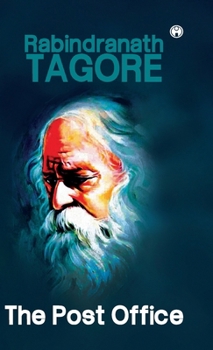
The Post Office

Select Format
Select Condition 
Book Overview
Tagore's post Office represents a young boy who has received the call of the open road. He seeks freedom from the comfortable enclosure of habits sanctioned by the prudent and from walls of rigid opinion built for him by the respectable.
Format:Hardcover
Language:English
ISBN:9390404630
ISBN13:9789390404636
Release Date:December 2020
Publisher:Insight Publica
Length:48 Pages
Weight:0.45 lbs.
Dimensions:0.3" x 5.5" x 8.5"
Customer Reviews
3 ratings
After Death, There's Life
Published by Thriftbooks.com User , 17 years ago
This play by the Nobel laureate Rabindranath Tagore is one of those pieces of literature that truly deserves to be remembered and admired as it was in London in 1914, when William Butler Yeats remarked that this little play "...is very perfectly constructe and conveys to the right audience an emotion of gentleness and peace." To Western eyes, at first glance, a play about a dying child may see morbid. The reader and theatregoer quickly realize, however, that Amal, the moribund boy, simply wants to experience the world through they eyes of a common dairyman and receive a letter from the king. He appreciates the small things in life and wants to live his life to the fullest, without pity or decadence. The thought of death barely enters his mind. It is, then, without coincidence, that the play was aired over the radio during Europe's darkest hours under Nazi occupation in World War II. The most poignant performance of the play was in July 1942, in the Warsaw Ghetto, when the Polish doctor, educator, writer, and children's rights activist Janusz Korczak had the children in his orphanage stage this play. As with the central character, Amal, the children were better able to accept death as part of life, preparing for certain death that awaited them. Said Korczak, "The play is more than a text - it is a mood, it conveys more than emotions - it is an experience, and the actors are more than actors -they are children." In accepting death one can affirm life.
After Death, There's Life
Published by Thriftbooks.com User , 17 years ago
This play by the Nobel laureate Rabindranath Tagore is one of those pieces of literature that truly deserves to be remembered and admired as it was in London in 1914, when William Butler Yeats remarked that this little play "...is very perfectly constructe and conveys to the right audience an emotion of gentleness and peace." To Western eyes, at first glance, a play about a dying child may see morbid. The reader and theatregoer quickly realize, however, that Amal, the moribund boy, simply wants to experience the world through they eyes of a common dairyman and receive a letter from the king. He appreciates the small things in life and wants to live his life to the fullest, without pity or decadence. The thought of death barely enters his mind. It is, then, without coincidence, that the play was aired over the radio during Europe's darkest hours under Nazi occupation in World War II. The most poignant performance of the play was in July 1942, in the Warsaw Ghetto, when the Polish doctor, educator, writer, and children's rights activist Janusz Korczak had the children in his orphanage stage this play. As with the central character, Amal, the children were better able to accept death as part of life, preparing for certain death that awaited them. For in accepting death one can affirm life.
The Post Office
Published by Thriftbooks.com User , 22 years ago
This short play is greatr. It made me think about my own life and what I may or may not be doing. It made me think about what is real or unreal. It's well worth the half hour it takes to read.
Copyright © 2026 Thriftbooks.com
Terms of Use | Privacy Policy | Do Not Sell/Share My Personal Information | Cookie Policy | Cookie Preferences | Accessibility Statement
ThriftBooks ® and the ThriftBooks ® logo are registered trademarks of Thrift Books Global, LLC
ThriftBooks ® and the ThriftBooks ® logo are registered trademarks of Thrift Books Global, LLC
