


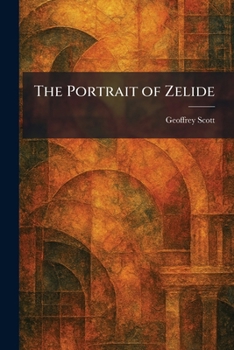
The Portrait of Zelide

Select Format
Select Condition 
Book Overview
"The Portrait of Zelide" is a masterful and evocative biography by Geoffrey Scott, focusing on the life and intellectual spirit of Isabelle de Charri re, known to her friends as Zelide. Set against the vibrant backdrop of the eighteenth century, this work captures the complexity of a woman who was at once a philosopher, a novelist, and a sharp observer of the aristocratic societies of the Netherlands and France.
Through Scott's elegant and fluid prose, the reader is introduced to Zelide's brilliant mind and her unconventional relationships, most notably her long and intricate correspondence with the writer Benjamin Constant and her brief encounter with James Boswell. The narrative explores her lifelong struggle for intellectual independence and emotional fulfillment in a world that often sought to confine the ambitions of women. Scott does not merely provide a chronological account but rather paints a profound psychological portrait, delving into the wit, the melancholy, and the vibrant internal life of a woman who felt herself to be an outsider in her own time.
Considered a classic of modern biographical literature, "The Portrait of Zelide" remains a definitive study of an exceptional figure of the Enlightenment. It offers a window into the cultural and philosophical tensions of the era, making it essential reading for those interested in literary history and the lives of remarkable women.
This work has been selected by scholars as being culturally important, and is part of the knowledge base of civilization as we know it. This work was reproduced from the original artifact, and remains as true to the original work as possible. Therefore, you may see the original copyright references, library stamps (as most of these works have been housed in our most important libraries around the world), and other notations in the work.
This work is in the public domain in the United States of America, and possibly other nations. Within the United States, you may freely copy and distribute this work, as no entity (individual or corporate) has a copyright on the body of the work.
As a reproduction of a historical artifact, this work may contain missing or blurred pages, poor pictures, errant marks, etc. Scholars believe, and we concur, that this work is important enough to be preserved, reproduced, and made generally available to the public. We appreciate your support of the preservation process, and thank you for being an important part of keeping this knowledge alive and relevant.
Customer Reviews
ThriftBooks ® and the ThriftBooks ® logo are registered trademarks of Thrift Books Global, LLC
