


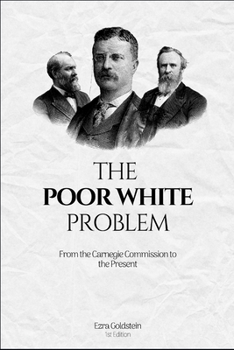
The Poor White Problem: From the Carnegie Commission to the Present

In The Poor White Problem: From the Carnegie Commission to the Present, Ezra Goldstein offers a comprehensive examination of how historical policies aimed at addressing white poverty were intertwined with broader systems of racial discrimination. This insightful work explores the origins of these policies through the lens of the Carnegie Commission, revealing the deep-seated ideologies that shaped both segregation in the United States and apartheid in South Africa.
Goldstein methodically charts the progression from early 20th-century theories of eugenics to the legal and institutional structures that continue to affect our society today. By highlighting the overlooked complexities behind the so-called "poor white problem," the book challenges conventional narratives and urges readers to reexamine how past decisions impact contemporary issues of inequality.
Balancing respect for historical context with a forward-thinking approach, this book is a call to awareness, education, and advocacy. It encourages readers-scholars, policymakers, and concerned citizens alike-to consider how an honest understanding of our past can inspire transformative change. Discover how historical analysis can serve as a catalyst for building a more just and equitable future.
Customer Reviews
ThriftBooks ® and the ThriftBooks ® logo are registered trademarks of Thrift Books Global, LLC
