


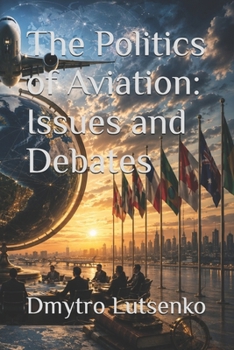
The Politics of Aviation: Issues and Debates

Several themes run throughout the volume. One is the tension between the globalising logic of aviation and the territorial logic of state sovereignty, visible in disputes over airspace, international regulation, and market access. Another is the unresolved conflict over ownership and control within the airline industry, where crises repeatedly challenge the assumptions of deregulated markets. The environmental crisis positions aviation as a central test of whether political systems can impose short-term economic costs in pursuit of long-term collective goals. At the same time, the unequal distribution of aviation's benefits raises profound questions about social justice and global inequality, particularly in a world where the majority of humanity has never flown.
Written for students, researchers, policymakers, and general readers, The Politics of Aviation provides an integrated framework for understanding one of the most globalised yet politically contested sectors of the modern world. No specialist knowledge of aviation is required. What the book assumes instead is that the politics of flight reveals broader truths about power, inequality, governance, and the organisation of contemporary society itself.
Customer Reviews
ThriftBooks ® and the ThriftBooks ® logo are registered trademarks of Thrift Books Global, LLC
