


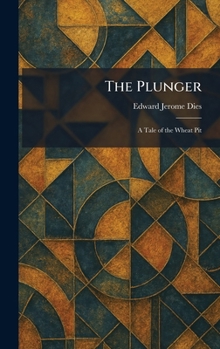
The Plunger: A Tale of the Wheat Pit

"The Plunger: A Tale of the Wheat Pit" provides a gripping account of the high-stakes world of grain speculation during the late 19th and early 20th centuries. Centered on the career of Benjamin P. Hutchinson, the legendary trader known as "Old Hutch," the narrative explores the volatile environment of the Chicago Board of Trade. It details the dramatic attempt to corner the wheat market in 1888, illustrating the immense power and sudden ruin that characterized the era's financial titans.
Through the lens of Hutchinson's rise and fall, the work provides a vivid portrayal of the "pit"-a place where fortunes were made and lost in a single day. The book serves as both a biography and a historical study of the evolution of the American commodity markets, capturing the psychological intensity of speculation and the early regulatory struggles of the trading floors. Readers interested in business history, economic shifts, and the origins of modern financial markets will find this a fascinating exploration of a pivotal era in American commerce. By documenting the life of one of the most daring figures in financial history, the work sheds light on the mechanisms of market manipulation and the enduring nature of human ambition.
This work has been selected by scholars as being culturally important, and is part of the knowledge base of civilization as we know it. This work was reproduced from the original artifact, and remains as true to the original work as possible. Therefore, you may see the original copyright references, library stamps (as most of these works have been housed in our most important libraries around the world), and other notations in the work.
This work is in the public domain in the United States of America, and possibly other nations. Within the United States, you may freely copy and distribute this work, as no entity (individual or corporate) has a copyright on the body of the work.
As a reproduction of a historical artifact, this work may contain missing or blurred pages, poor pictures, errant marks, etc. Scholars believe, and we concur, that this work is important enough to be preserved, reproduced, and made generally available to the public. We appreciate your support of the preservation process, and thank you for being an important part of keeping this knowledge alive and relevant.
Customer Reviews
ThriftBooks ® and the ThriftBooks ® logo are registered trademarks of Thrift Books Global, LLC
