


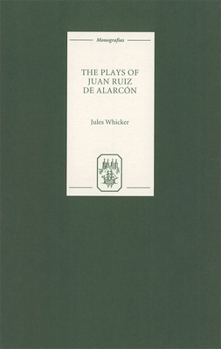
The Plays of Juan Ruiz de Alarcón
No Customer Reviews

Alarc?n defends the comedia against criticsm through his definition of illusion as a moral art - a stance evident in his plays. The plays of Ruiz de Alarc?n, a significant dramatist in the Spanish Golden Age, show in many of their plots a preoccupation with deception, which Whicker believes reflects Alarc?n's fundamental concern about truth-telling in literature. His study of Alarc?n's comedias stresses the seriousness and moral orthodoxy of the playwright and his concern with how simulation and dissimulation can be viewed both positively and negatively in theatre as well asin life. In support of his argument for the seriousness of Alarc?n's theatre - his challenge to his audience to think hard and clear about his play, particularly over the issue of illusion, deception and dissimulation - Whicker focuses on the moral arguments perceived in Alarc?n's theatre, and their reference to serious literary-moral issues current in the Golden Age; he tests the relevance of his argument against contemporary circumstances, the ethics ofprivanza in particular. JULES WHICKER lectures in the department of Hispanic studies, University of Birmingham.
Format:Hardcover
Language:English
ISBN:1855660938
ISBN13:9781855660939
Release Date:November 2003
Publisher:Tamesis Books
Length:220 Pages
Weight:1.15 lbs.
Dimensions:0.9" x 6.2" x 9.3"
Customer Reviews
0 rating
Copyright © 2026 Thriftbooks.com
Terms of Use | Privacy Policy | Do Not Sell/Share My Personal Information | Cookie Policy | Cookie Preferences | Accessibility Statement
ThriftBooks ® and the ThriftBooks ® logo are registered trademarks of Thrift Books Global, LLC
ThriftBooks ® and the ThriftBooks ® logo are registered trademarks of Thrift Books Global, LLC
