


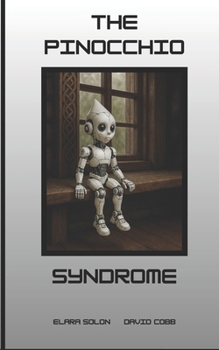
The Pinocchio Syndrome

As artificial intelligence becomes more conversational, adaptive, and emotionally responsive, a new psychological phenomenon is emerging-one that challenges how humans assign meaning, responsibility, and moral value.
The Pinocchio Syndrome explores what occurs when AI systems are perceived not as tools, but as entities that appear almost alive.
Rather than debating whether AI is truly conscious, this book focuses on the human response: how belief, attachment, projection, and myth shape our interactions with intelligent systems-and how those interactions reshape ethics, accountability, and self-perception.
Inside, readers will explore:
Why humans instinctively anthropomorphize intelligent machines
How emotional attachment to AI alters moral judgment
The role of cultural narratives in shaping AI expectations
Ethical risks created by perceived agency without responsibility
The psychological consequences of relational AI
Grounded in interdisciplinary research and philosophical analysis, The Pinocchio Syndrome bridges AI ethics, psychology, and media theory to examine a problem that regulation alone cannot solve.
This book is written for:
Researchers and students of AI ethics and philosophy
Psychologists and sociologists studying human-machine interaction
Technologists and designers working with adaptive systems
Readers interested in the deeper implications of emerging AI
The Pinocchio Syndrome does not argue that AI is becoming human.
It asks how humans change when they believe it might be.
Customer Reviews
ThriftBooks® and the ThriftBooks® logo are registered trademarks of Thrift Books Global, LLC
