


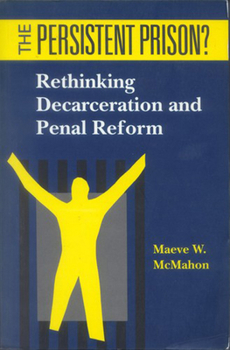
The Persistent Prison?: Rethinking Decarceration and Penal Reform

The Prison system is widely believed to be an immutable element of contemporary society. Many criminologists and sociologists of deviance believe that decarceration movements have failed to yield progressive reform, and that feasible alternatives to the prison system do not exist.
Maeve McMahon challenges these views. Reconstructing the emergence of critical perspectives on decarceration, she examines analytical and empirical problems in the research. She also points out how indicators of community programs and other penalties serving as alternatives to prison have typically been overshadowed through critical focus on their effects in 'widening the net' of control.
McMahon presents a detailed analysis of decreasing imprisonment, and of the part played by alternatives in this, during the postwar period in Ontario. Drawing from extensive documentary research, and from interviews with former correctional officials, she charts the changing climates of opinions, and socio-economic factors, which facilitated decarceration.
By situating her analysis in the context of theoretical and political arguments about the possibility of decarceration, McMahon provides in her work a stimulus to the development of progressive penal politics not just in Canada, but in all western countries.
Customer Reviews
Excellent book
ThriftBooks ® and the ThriftBooks ® logo are registered trademarks of Thrift Books Global, LLC
