


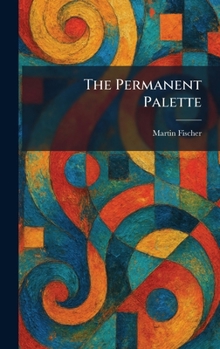
The Permanent Palette

"The Permanent Palette" is an authoritative and scientific exploration of the chemistry and longevity of pigments used in fine art. Written with the precision of a scientist and the soul of an artist, this work serves as an essential manual for understanding how colors behave over time and under various environmental conditions. The text provides a comprehensive analysis of the physical and chemical properties of paints, offering a rigorous classification of pigments based on their stability and lightfastness.
By distinguishing between permanent, semi-permanent, and fugitive colors, the book provides painters with the necessary knowledge to select materials that will ensure the endurance of their artistic legacy. It covers the technical aspects of mediums, the interaction of different chemical compounds on the canvas, and the methods for maintaining the brilliance of a finished work. This volume is a vital resource for professional artists, art students, and conservators alike, bridging the gap between the laboratory and the studio. Its focus on the structural integrity of art makes "The Permanent Palette" a foundational text for anyone dedicated to the craft of painting and the preservation of visual culture.
This work has been selected by scholars as being culturally important, and is part of the knowledge base of civilization as we know it. This work was reproduced from the original artifact, and remains as true to the original work as possible. Therefore, you may see the original copyright references, library stamps (as most of these works have been housed in our most important libraries around the world), and other notations in the work.
This work is in the public domain in the United States of America, and possibly other nations. Within the United States, you may freely copy and distribute this work, as no entity (individual or corporate) has a copyright on the body of the work.
As a reproduction of a historical artifact, this work may contain missing or blurred pages, poor pictures, errant marks, etc. Scholars believe, and we concur, that this work is important enough to be preserved, reproduced, and made generally available to the public. We appreciate your support of the preservation process, and thank you for being an important part of keeping this knowledge alive and relevant.
Customer Reviews
ThriftBooks ® and the ThriftBooks ® logo are registered trademarks of Thrift Books Global, LLC
